
Introduction
India ka general trade ecosystem digital ho raha hai, lekin change sirf consumer-facing marketplace tak limited nahin hai. ONDC DigiDukaan ka focus neighbourhood retailers, brands, distributors, logistics aur credit partners ko ek shared B2B procurement layer par connect karna hai.
Press Information Bureau ne 30 October 2026 ko programme update publish kiya. Uske according September 2026 tak DigiDukaan 21,000 se zyada retailers aur 450-plus brands ko Hyderabad, Jaipur aur Mumbai mein connect kar raha tha. Previous quarter mein 12,000 retailers report hue the. Hyderabad cohort ke liye 73–78% monthly repeat ordering aur initial study mein 40% surveyed retailers ke lower inventory levels report kiye gaye.
Numbers encouraging hain, lekin inhe carefully read karna zaroori hai. Yeh programme-provided data hai, national retail census ya independent audit nahin. Rollout three cities tak cited hai.
DigiDukaan exactly kya hai?
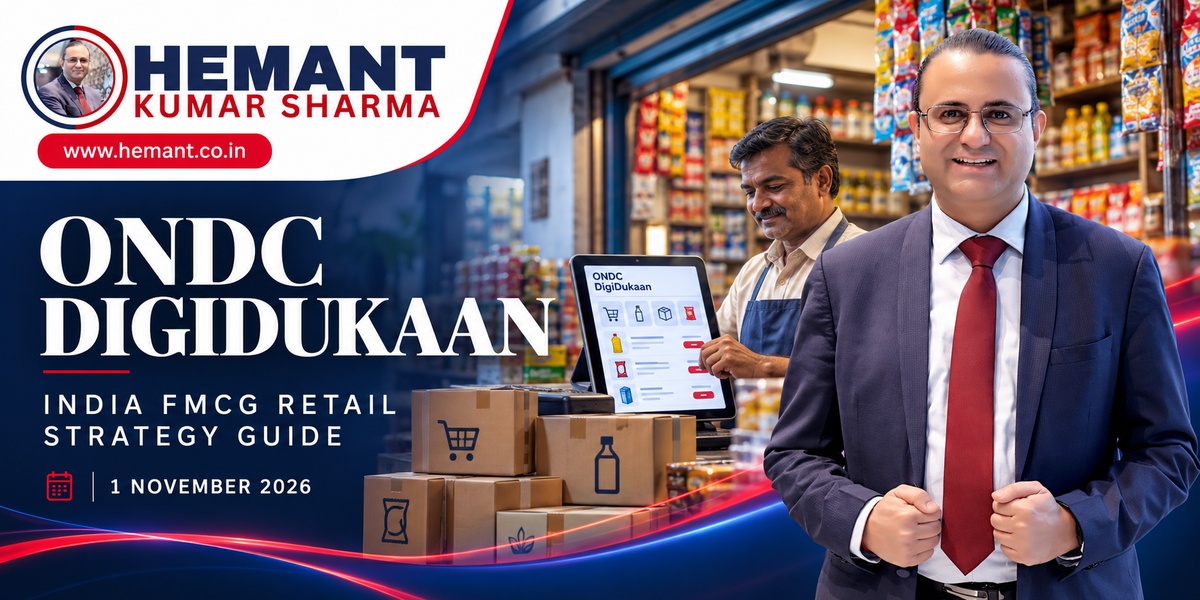
DigiDukaan ONDC-enabled B2B procurement initiative hai. Retailer ek common digital identity ke through multiple brands aur distributors se products discover aur order kar sakta hai. Programme description direct brand-distributor integration, shared logistics, demand visibility, digital payments, credit access aur distributor-management-system connectors highlight karta hai.
Traditional FMCG chain mein retailer ordering field-sales visit, phone call, WhatsApp list aur distributor relationship par depend kar sakti hai. DigiDukaan ka intended value ek interoperable ordering layer banana hai, jahan catalogue, availability, ordering aur fulfilment participants ke beech better coordinate ho sake.
Isse D2C marketplace samajhna galat hoga. Primary use case retailer procurement hai, end-consumer checkout nahin.
Confirmed facts
- PIB update 30 October 2026 ko publish hua.
- Reported operating footprint: Hyderabad, Jaipur and Mumbai.
- September 2026 tak 21,000-plus retailers aur 450-plus brands.
- Previous quarter reported retailer base 12,000 tha.
- Hyderabad mein 16,000 retailers aur 73–78% monthly repeat ordering reported hai.
- Initial study mein 40% surveyed retailers ne lower inventory levels report kiye.
- Platform shared digital identity, brand/distributor ordering, logistics, credit and DMS integration support describe karta hai.
- Figures programme-reported hain; post national India-wide availability prove nahin karta.
Why this matters for Indian FMCG brands
General trade visibility improve ho sakti hai
Many brands secondary sales, store-level inventory aur reorder patterns ko delayed reports se dekhte hain. Digital B2B ordering more frequent demand signals create kar sakta hai. Isse assortment planning, sales prioritisation aur replenishment better ho sakta hai.
Lekin data availability automatically data quality guarantee nahin karti. SKU mapping, pack size, retailer identity aur distributor codes clean na hon toh dashboard misleading rahega.
Long-tail retailers tak reach expand ho sakti hai
Field-sales teams usually high-value routes prioritise karti hain. Digital ordering low-frequency ya geographically scattered retailers ko additional access de sakta hai. Brand ko yeh decide karna hoga ki catalogue, minimum order quantity, schemes aur service-level promises digital channel ke liye kaise structure hon.
Distributor role disappear nahin hota
DigiDukaan ka sensible interpretation “distributor replacement” nahin, “distributor coordination layer” hai. Physical fulfilment, credit relationship, returns, local service aur route economics distributor ke paas rahenge. Brands ko channel conflict avoid karne ke liye pricing and territory policies clear rakhni hongi.
Kirana retailers ke liye implications
Ordering convenience tab valuable hai jab fulfilment reliable ho
App ya digital storefront easy ho sakta hai, but retailer outcome fill rate, delivery time, scheme accuracy aur damaged-goods resolution par depend karega. Retailer ko sirf order placement adoption metric se judge karna incomplete hoga.
Inventory reduction claim ko context chahiye
40% surveyed retailers ke lower inventory levels ka reported signal interesting hai. Lekin public update sample size, category mix, measurement method aur control group ki full detail provide nahin karta. Business should treat it as directional evidence, not guaranteed saving.
Credit discipline critical rahegi
Embedded or partner credit availability retailer working capital help kar sakti hai. Saath hi repayment terms, effective cost, dispute process aur data-sharing consent transparent hone chahiye. “Instant credit” ko marketing hook banane se pehle suitability and compliance review zaroori hai.
For distributors and logistics partners
DMS connector readiness
Distributor-management systems mein retailer IDs, SKU codes, tax details, inventory status aur route mapping standardise hone chahiye. Duplicate masters ya inconsistent pack sizes order errors create karenge.
Service-level design
Partners ko at least yeh metrics define karne chahiye:
- Order acceptance time.
- Fill rate.
- On-time delivery.
- Short shipment and substitution rate.
- Return resolution time.
- Payment and credit reconciliation.
- Cost per fulfilled order.
Digital orders field orders ke saath compete karenge, isliye warehouse picking and route capacity separately plan karein.
India-specific opportunity map
Emerging FMCG brands
Regional ya challenger brands DigiDukaan-type channels se targeted city pilots run kar sakte hain. Full national expansion se pehle 20–50 priority SKUs, limited pin codes aur serviceable distributor network choose karna safer hoga.
Large brands
Large brands ke liye opportunity data harmonisation aur assortment experimentation mein hai. Existing distributor relationships ko bypass karne ke bajaye connected planning use karein.
Retail-tech providers
Catalogue management, DMS integration, analytics, credit risk, last-mile orchestration aur retailer support mein B2B solutions ki need hogi. Vendors ko ONDC compatibility ke saath auditability and reconciliation prove karna hoga.
Consultants and agencies
Marketing agency ko sirf retailer acquisition campaign par focus nahin karna chahiye. Adoption depends on onboarding, catalogue quality, sales enablement, repeat ordering and operational support. Engagement scope mein commercial and operational KPIs include hone chahiye.
Retailer onboarding, catalogue communication aur repeat-order campaigns ko operational priorities se connect karne ke liye digital marketing agency services ka scope apni business needs ke saath evaluate karein.
30-day pilot framework
Week 1: Readiness audit
One city, one distributor cluster and limited brand portfolio choose karein. Retailer master, SKU master, GST details, pricing, schemes, inventory feed and service area validate karein.
Week 2: Commercial design
Minimum order value, delivery promise, returns, credit eligibility and dispute ownership document karein. Digital and offline scheme conflicts identify karein.
Week 3: Controlled onboarding
Small retailer cohort onboard karein. Training simple Hinglish or local-language material mein dein. First order ke saath assisted support provide karein, but repeat order independently measure karein.
Week 4: Review
Adoption se zyada repeat and fulfilment dekhein. Cohort metrics:
- Activated retailers.
- First-order completion.
- 30-day repeat order rate.
- Average order value.
- Fill rate.
- Delivery time.
- Stock-out incidence.
- Returns and disputes.
- Cost to serve.
- Incremental versus shifted sales.
Pilot pass/fail thresholds launch se pehle agree karein. Agar digital orders sirf existing phone orders ko re-label kar rahe hain, incremental value overstate na karein.
What brands should not assume
- DigiDukaan poore India mein universally available hai.
- 21,000 retailers active monthly buyers hain; public update connected scale report karta hai, not identical activity for every account.
- Hyderabad repeat rate every city or category mein replicate hogi.
- Lower inventory automatically higher profit create karega.
- Digital ordering distributor, credit or logistics complexity eliminate kar dega.
- Programme-reported numbers independent market audit ke equivalent hain.
Confirmed facts vs analysis
Confirmed: PIB ne three-city footprint, 21,000-plus retailers, 450-plus brands, Hyderabad repeat-order range aur initial inventory finding report ki. It also described common identity, ordering, logistics, DMS and credit integrations.
Analysis: These capabilities may improve visibility, assortment and replenishment, but commercial value depends on data quality, fulfilment reliability, retailer economics and partner governance. National rollout, category-level impact and independent ROI evidence public note se establish nahin hote.
Practical governance checklist
- Named owner for catalogue and pricing.
- Distributor and brand role matrix.
- Retailer consent and data-access rules.
- Credit disclosure and grievance process.
- Inventory and order reconciliation cadence.
- Service-level dashboard.
- Scheme conflict escalation.
- Pilot cohort and control comparison.
- Independent finance validation of claimed savings.
Conclusion
ONDC DigiDukaan India ke B2B retail digitisation story ka meaningful development hai, especially because it connects demand generation with procurement and fulfilment. But success app downloads se nahin, repeat ordering, fill rate, working-capital impact aur profitable service se prove hoga.
Discuss Your Business Strategy
FMCG brand, distributor network ya retail-tech product ke go-to-market priorities clear karni hain? Hemant Kumar Sharma ke saath strategic digital marketing consultation explore karein. Call/WhatsApp: +91 98116 81687.
Sources
Press Information Bureau, “DigiDukaan Accelerates Digital Transformation of India’s Retail Ecosystem,” published 30 October 2026; programme status cited as of September 2026:
https://www.pib.gov.in/PressReleseDetailm.aspx?PRID=2330634&lang=2®=48
Scale, repeat-order and inventory figures are programme-reported; the public release does not provide a full independent evaluation methodology.