How a three-month Meta Ads engagement combined lead generation, international website traffic, Meta Pixel implementation and an organised handover for independent continuation.
Case study type: Meta Ads Management & Measurement Foundation
Client: Wild Life Tour India / Harsh Agarwal
Meta Ads service period: 15 April–14 July 2026
Overall three-project relationship: 15 April–15 October 2026
Services: Meta Ads Strategy | Lead Generation | Website Traffic | Audience & Creative Analysis | Meta Pixel | Website Event Tracking | Reporting & Handover
Consultant: Hemant Kumar Sharma / Enovate Digital
One client relationship, three distinct advertising projects
The overall relationship spanned 15 April–15 October 2026 and comprised one Meta Ads project and two separate Google Ads projects. This article examines the defined three-month Meta Ads assignment for Wild Life Tour India; its scope must be distinguished from the wider relationship across all three projects.
| Platform | Project | Reporting boundary |
|---|---|---|
| Meta Ads | Wild Life Tour India | 15 April–14 July 2026; the Meta assignment discussed below |
| Google Ads | Wildlife Tour India | Separate Search advertising project within the overall relationship |
| Google Ads | Golden Triangle Tour | Separate Search advertising project within the overall relationship |
The Google Ads projects had their own campaign objectives, reports and measurement questions. Their outcomes are assessed separately from the Meta Ads assignment. The end of Meta management in July therefore does not mean that the entire three-project relationship ended then.
Original campaign creative showcase
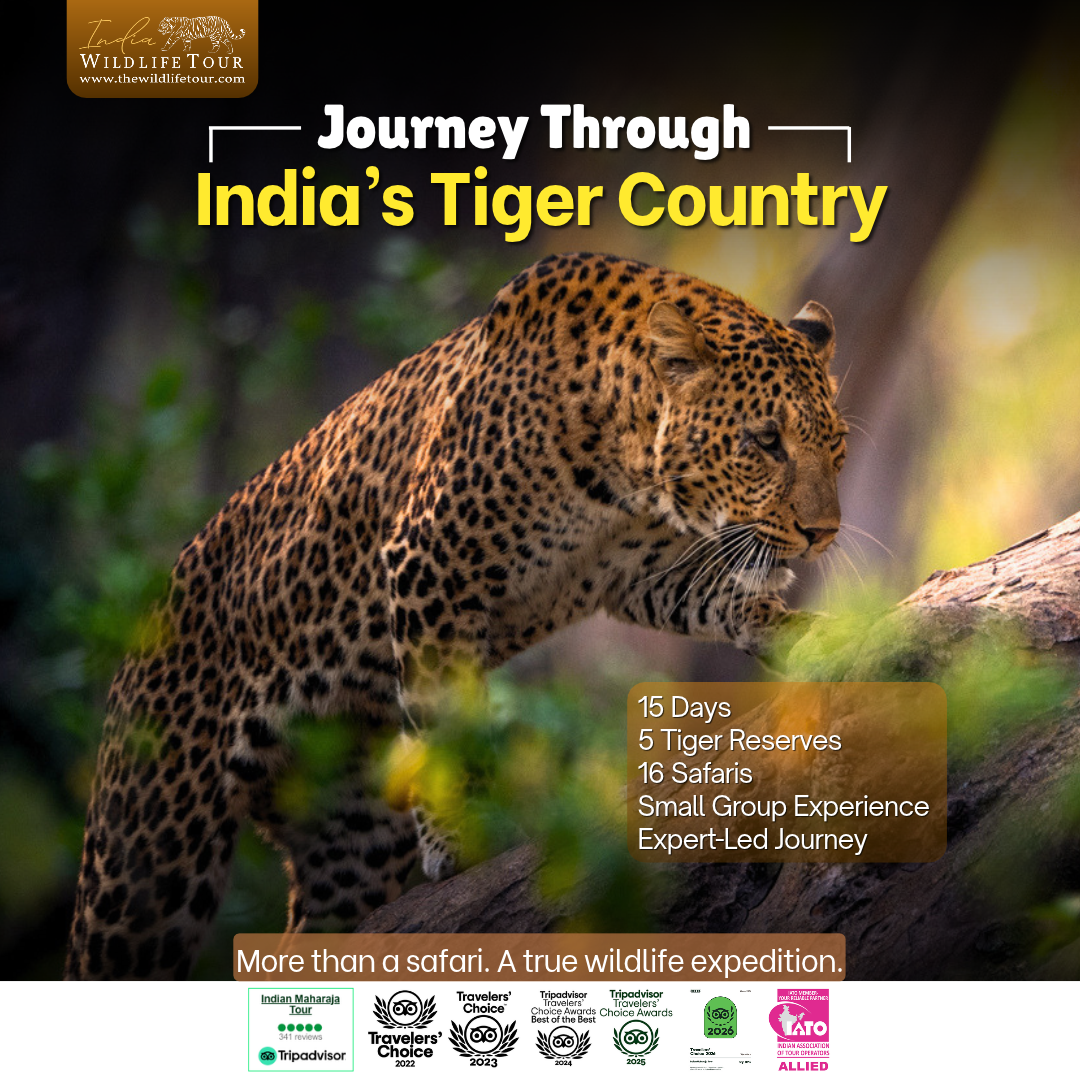
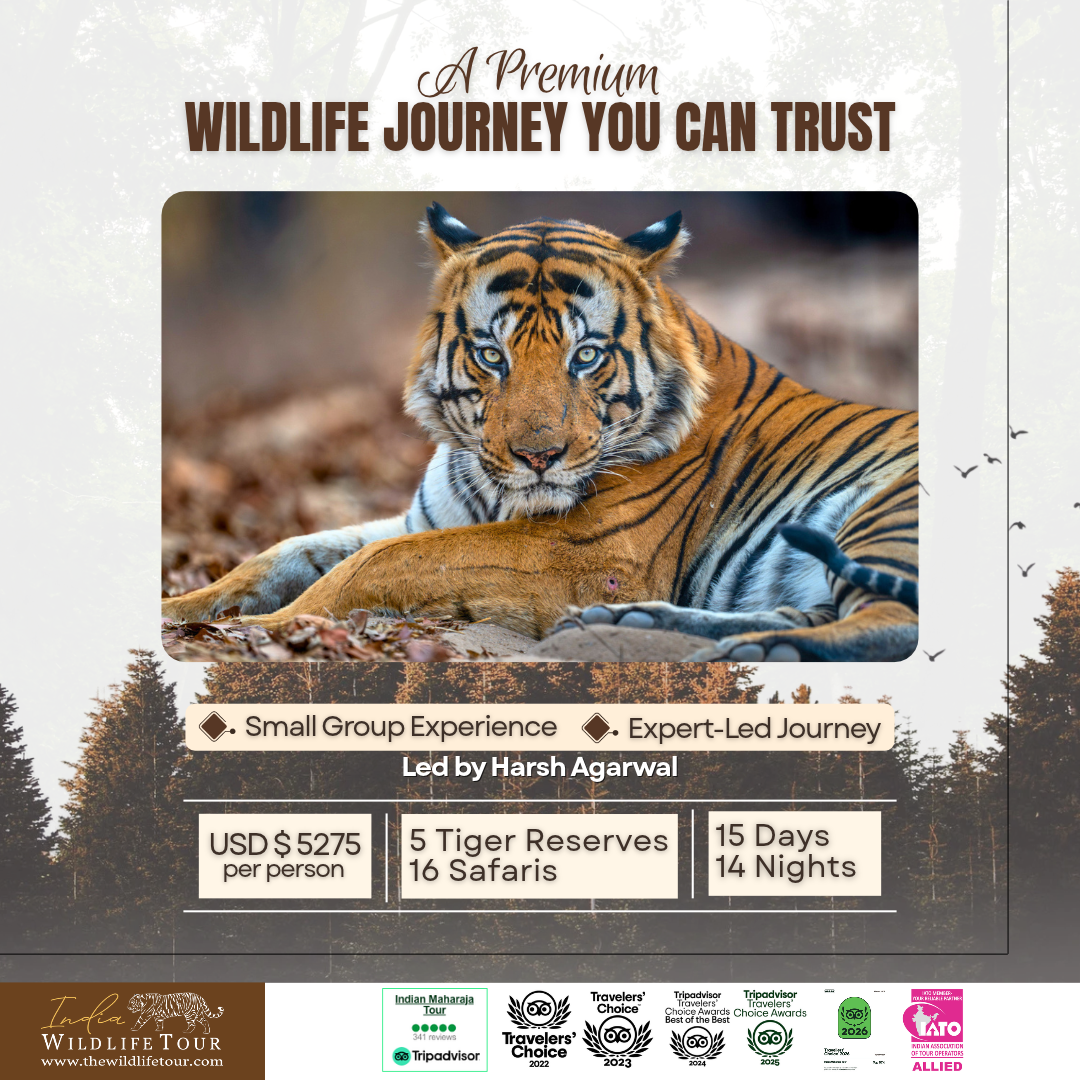
A selection of original project creatives, showing different wildlife subjects, message treatments and campaign formats. Select an image to view it in full. Public-facing prices, itinerary details and review badges belong to the historical artwork; they are not current offers or confidential campaign-performance figures.
Advertising should leave more than a set of campaign results
Advertising a specialist travel service requires patience with the customer’s decision-making process. A person interested in a wildlife tour may be comparing destinations, national parks, itineraries, operators and travel dates before contacting a provider. The route from seeing an advertisement to making a booking can therefore be longer and more complicated than a single form submission.
That was an important consideration in our 15 April–14 July 2026 Meta Ads engagement with Wild Life Tour India, the specialist wildlife-travel business associated with Harsh Agarwal. The assignment had two different campaign objectives: generate enquiries within Meta’s lead environment and send interested travellers to the website for more detailed exploration.
Alongside these campaigns, we worked on the measurement infrastructure beneath the advertising. Meta Pixel implementation and website-event tracking became central to the engagement because campaign results could not be interpreted responsibly from clicks alone.
The outcome was a documented advertising foundation: recorded enquiry and website-discovery activity, campaign learning, and tracking infrastructure that the client could retain after the Meta Ads managed-service period ended. Advertising response is considered separately from confirmed bookings or financial return.
The business context: a specialist travel decision
Wildlife travel is not a mass-market, everyday purchase. Prospective customers may need to compare destinations, seasonal access, park availability, accommodation and tour formats. Travellers based overseas may begin researching well before their intended visit to India. The historical project record also notes that the client considered part of the engagement period an off-season for the business.
These conditions shaped the assignment. A campaign promoting wildlife travel could generate useful visibility or an initial enquiry without producing an immediate booking. The sensible approach was therefore to create distinct campaigns for direct lead acquisition and website discovery, then read the outputs independently.
A second challenge concerned measurement. Travellers can contact a tour business through forms, telephone, WhatsApp, email or other channels. A link click confirms that Meta recorded a click; it does not establish that the visitor reached the website successfully, submitted an enquiry or booked a tour. Better website instrumentation was needed to study those later actions.
The engagement: two campaign objectives, one measurement foundation
During the agreed three-month period, Meta advertising was organised around two campaign objectives:
- Lead generation: invite potential customers to submit details using Meta’s lead-form experience.
- Website traffic: introduce the travel offering and direct visitors to the website for deeper research and potential contact.
The campaigns were reviewed by objective, audience, creative and delivery metrics. Technical work on the Meta Pixel and website events was undertaken in parallel, followed by a detailed performance report and handover so the client could continue without ongoing agency management.
Combining all responses into one vague figure would have hidden the difference between a person completing a lead form and a person clicking through to a site. The discussion below therefore keeps those actions separate.
Enquiry generation
Separate lead-form measurement
Website discovery
Objective-specific traffic analysis
Measurement foundation
Website events and Meta Pixel
Structured handover
Documented learning for continuation
Campaign 1: direct lead generation
The dedicated Meta lead-generation campaign established an observable enquiry pathway. Review focused on response quality, creative effectiveness and the follow-up needed to understand commercial outcomes. Detailed campaign volumes, expenditure and acquisition costs remain confidential.
Creative-level review showed that one message contributed a greater share of form responses. This informed the optimisation discussion without treating form submissions as confirmed customers.
Audience analysis informed planning and message relevance. Detailed demographic breakdowns are kept confidential and are not presented as proof of purchasing intent or customer profitability.
The main achievement of this campaign was to establish an observable lead-acquisition result for a specialist travel offer. The project record does not equate these form submissions with qualified quotations, confirmed itineraries or completed bookings, and neither does this case study.
Different visual formats, different communication roles. The archive includes both direct tour promotion and wildlife-awareness content. These examples show the creative range without disclosing private delivery results.

Campaign 2: website discovery and international audience testing
The website-discovery campaign encouraged interested travellers to explore the offering in more detail. Its performance was reviewed against the traffic objective, independently of lead-form activity.
International audience testing enabled comparison of response patterns across selected markets. Market-level volumes, costs and targeting details remain confidential.
Audience comparisons helped distinguish click-through response from later customer actions. Stronger advertising engagement was not presented as evidence of confirmed travel bookings.
Creative-level findings distinguished volume, reach and response efficiency. The most widely delivered asset was not automatically the strongest choice for every objective.
Responsible reporting across campaign objectives
The reporting framework kept lead acquisition, website traffic and website events separate. Public discussion focuses on the method and learning while detailed commercial results remain confidential.
Campaign impressions represent exposures rather than unique people, and reach should not be added across overlapping audiences. Form submissions and website clicks represent different actions and should not be combined into a conversion total.
Advertising delivery and billing reconciliation were reviewed separately in the client handover.
The critical technical contribution: Meta Pixel and website events
The engagement was not limited to campaign creation or day-to-day ad optimisation. Meta Pixel installation was completed in late June 2026, following website integration troubleshooting. This was a significant technical step because it improved visibility into actions after someone reached the site.
The tracking review confirmed recorded PageView, Contact and Lead activity in the website-event setup. Event counts are kept confidential. Website events are distinct from Meta lead-form submissions and do not, by themselves, establish unique customers, campaign attribution or bookings.
The measurement foundation made it possible to work toward more informed website-action analysis and future audience development. Pixel installation could support remarketing and conversion-informed optimisation later; the archived record does not establish that a subsequent remarketing programme was launched, that all website contacts came from the campaigns, or that the event counts translated into sales.
This work demonstrates a broader consultancy principle: spending money on advertising before the website’s measurement is dependable can leave the business knowing how many people clicked, but not enough about what happened next.
What the data suggested for future improvement
Wildlife-tour websites can contain extensive content serving organic search and long-form research. That information is valuable, but a paid visitor who clicked an advertisement about a specific tour may need a more direct journey: one clearly described offering, an appropriate enquiry path, itinerary information, relevant trust signals and fewer navigation choices.
The engagement highlighted dedicated campaign landing experiences as a future improvement opportunity. This was a strategic recommendation emerging from the advertising and tracking review—not a claim that such landing pages were fully rebuilt during the three-month service period.
The client identified part of the work as occurring during a quieter travel period. That is relevant to interpretation, but it does not, by itself, explain every lead-quality or conversion issue. The more useful review distinguishes marketing response, website experience, customer travel timing, sales follow-up and booking outcomes.
A functioning Pixel and event framework can support the creation of audiences based on website interaction, subject to applicable consent and platform requirements. That future potential was part of the value of the technical work. It should not be misrepresented as an already completed remarketing campaign or as evidence of additional bookings.
Closing the engagement with a usable account
The three-month managed-service assignment concluded after 14 July 2026. The project record describes a detailed quarterly performance and service-closure review covering campaign, ad-set, creative, demographic and placement performance; Meta Pixel and website events; advertising expenditure and billing reconciliation; and future optimisation opportunities.
This documentation was particularly important because Harsh Agarwal continued the advertising independently after the Meta Ads management period ended. The engagement was therefore not framed as an indefinite retainer. The campaigns, technical foundation and reporting knowledge were left in a form the client could continue using.
An effective handover does not require the consultant to claim the client’s later results. Its professional value lies in delivering an intelligible account, an established measurement base, recorded learning and a clearer picture of what should be improved next.
Scope clarification: this was the closure of the Meta Ads managed-service assignment. The two separate Google Ads projects form part of the broader relationship ending on 15 October 2026; their results are not reported as Meta outcomes.
Results and value created
Across the April–July 2026 assignment, the work produced several distinct outputs:
- Two purposeful campaigns: separate lead acquisition and website traffic rather than one mixed measurement objective.
- Observable advertising response: lead-form and website-discovery activity, each evaluated using its own reporting definition.
- International testing: comparative audience-response analysis without disclosing market-level commercial data.
- Creative learning: evidence that lead volume, click volume, reach and efficiency varied across advertisements.
- Website measurement: Meta Pixel and selected website events implemented after integration troubleshooting.
- Useful future recommendations: clearer paid-traffic landing journeys and a potential basis for later remarketing.
- Documented service completion: campaign reporting and technical information supporting independent continuation.
The case study’s purpose is not to present link clicks as revenue, form leads as confirmed customers or historical impressions as unique people. It is to show how advertising execution, measurement and service handover can work together in a specialist travel business.
The broader lesson for businesses using Meta Ads
A campaign can generate clicks without generating useful conversations. It can also generate enquiries that require further qualification and sales follow-up before they become business. For longer-consideration purchases such as wildlife travel, the ad account is only one part of a larger system.
The Wild Life Tour India engagement demonstrates three principles: use the right metric for each campaign objective, build measurement beyond the advertising dashboard, and document the system so that it remains usable after the original management arrangement ends.
Those outcomes may not be as dramatic as an unsupported claim about bookings or return on advertising spend. They are more useful to a business that wants to understand what its advertising is doing and where the next improvement should take place.
Planning Meta Ads for a specialist or high-consideration service?
Whether a business needs qualified enquiries, international awareness, a stronger measurement setup or an orderly transition from agency to in-house management, it helps to begin with clear goals and reliable reporting definitions.
Hemant Kumar Sharma – Digital Marketing Consultant, Trainer & Mentor
Meta Ads Strategy | Lead Generation | Conversion Tracking | Campaign Analytics | Strategic Handover
Website: https://hemant.co.in/
Reporting note: This public case study discusses the documented 15 April–14 July 2026 Meta Ads assignment without disclosing confidential campaign totals or expenditure. Form leads, website clicks and website events are different measurements; they are not presented as confirmed travel bookings or financial return.
Explore digital marketing consultation options or return to the Case Studies Library.
Need Better Direction for Your Business Growth, Online Presence or Marketing Decisions?
Whether you need expert consultation, mentoring guidance, structured training or professional execution support, the next step should be clear, practical and commercially meaningful.
Choose the next step that fits you best
This strategic session gives you the deep clarity that most businesses lack. Instead of guessing, testing randomly, or wasting money on disconnected marketing, after attending you walk away with a clear, structured roadmap that eliminates confusion and provides a step-by-step action plan to move forward confidently.