

How Meta Ads, website planning, educational content, YouTube and WhatsApp revealed the difference between generating enquiries and earning a customer’s commitment.
Case study type: Digital Strategy, Meta Ads & Funnel Diagnosis
Client: Vedic Prakash / Learn with Sanjiv Tiwari
Principal engagement: Late 2025–early 2026; campaign review snapshot around 16 January 2026
Services: Digital Strategy | Meta Ads | Lead Generation | Website Conversion Planning | SEO & Content | YouTube | Webinar Marketing | WhatsApp Funnel Planning
Consultant: Hemant Kumar Sharma / Enovate Digital
A lead is not the same as a customer
Low cost per lead can be an encouraging advertising metric. It shows that a campaign can attract people willing to respond. But it does not answer whether those people are ready to register, pay, attend or purchase. For a business that sells expertise, this distinction can determine whether further advertising spend creates growth or simply enlarges the follow-up queue.
That distinction became central to our digital marketing engagement with Vedic Prakash, a Vedic Numerology education and consultation brand led by Sanjiv Tiwari. The work spanned website planning, SEO and educational content, social channels, YouTube optimisation, Meta Ads and promotion for a three-day webinar in January 2026.
The initial advertising response indicated interest in the subject. Progression from an enquiry toward a participation commitment required a closer review of trust, relevance and follow-up. The work therefore examined the customer journey beyond acquisition cost alone.
The question changed from “How do we produce more leads?” to “What must a prospective learner understand and experience before deciding to pay?”
The business and the original assignment
Vedic Prakash operated in a specialist, belief- and expertise-led education category. Its offering included numerology learning, workshops, consultations and training. Marketing the programme required clarity about the instructor, the subject, the learning experience and the route from initial discovery to a more substantial educational commitment.
The work described in the project records began in late 2025 and continued into early 2026. It was not restricted to an advertising account. Different digital touchpoints needed to support a coherent customer journey: a website that explained the service, educational search content, Facebook and Instagram communication, YouTube videos and a suitable lead-registration and follow-up process.
There was also a practical technical constraint. A planned WordPress migration could not be completed through the available access and the supplied backup format. Website and content activity therefore continued within the existing environment, while some technical changes remained limited by the hosting and access conditions. The case demonstrates why a marketing plan must account for the infrastructure actually available, not the infrastructure a consultant would ideally prefer.
Building useful digital touchpoints before the campaign
The website needed clearer paths for different kinds of interest, from an introductory numerology enquiry to a course or consultation. The conversion-planning work recommended relatively concise forms—around five to seven fields, depending on context—placed on relevant pages rather than a single undifferentiated form for every visitor.
The underlying idea was to obtain enough information for a meaningful follow-up without placing unnecessary friction in the path of someone who had only recently discovered the brand. Recommendations concerned the Home, Numerology, Courses, About and Contact journeys and the messages that would surround an enquiry.
SEO work focused on search subjects associated with Vedic Numerology in India. The content direction included explanatory articles of approximately 1,200–1,800 words, using accessible English with an appropriate Hindi touch for the intended audience. The objective was not simply to rank for keywords. Educational material was part of the process through which a visitor could assess what the instructor taught and whether the subject was relevant to them.
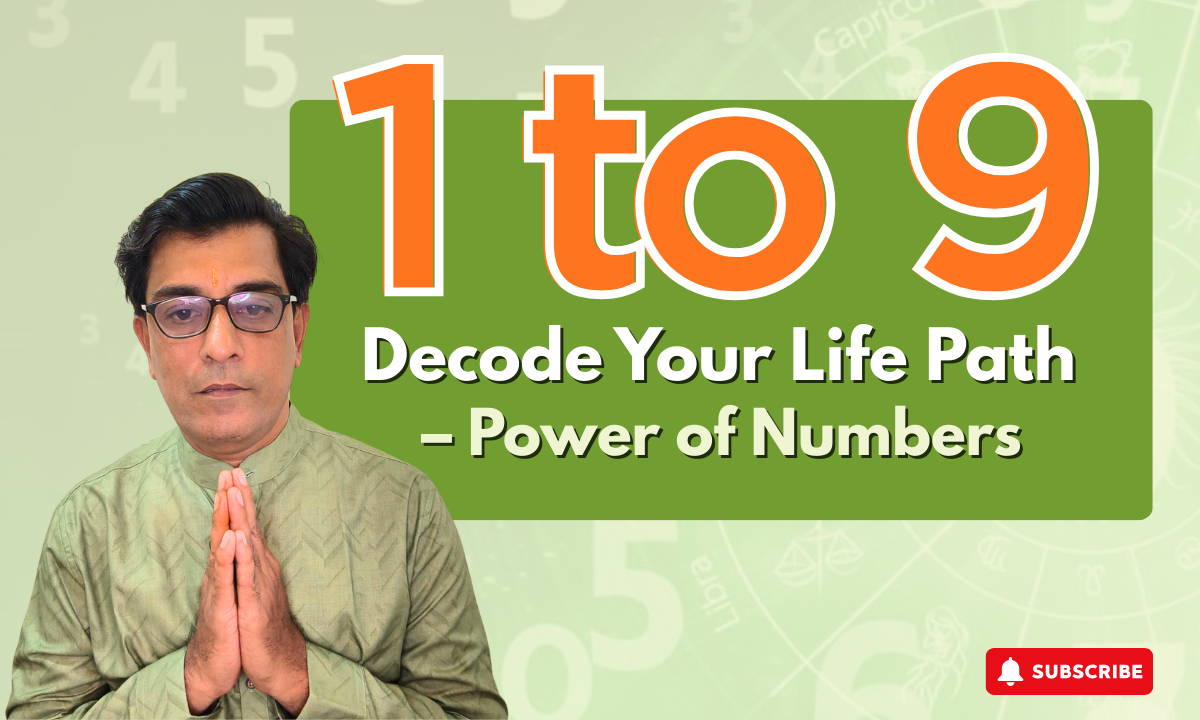
YouTube was used and planned as another place to show the instructor’s approach. A “Personality Traits / Meaning of Numbers 1 to 9” series provided a repeatable theme for video titles, descriptions, tags, playlists, pinned comments and course-related calls to action. A video explaining numerology concepts could serve people who were not yet willing to register for a paid programme.
These website, search and video activities were important because a cold advertisement could create attention, but it could not reasonably carry the full burden of explaining a specialist educational offering.
YouTube and webinar visual communication
Original educational and webinar artwork from the project archive shows how the instructor, subject and invitation were presented across different formats. Registration details and public offers are historical.
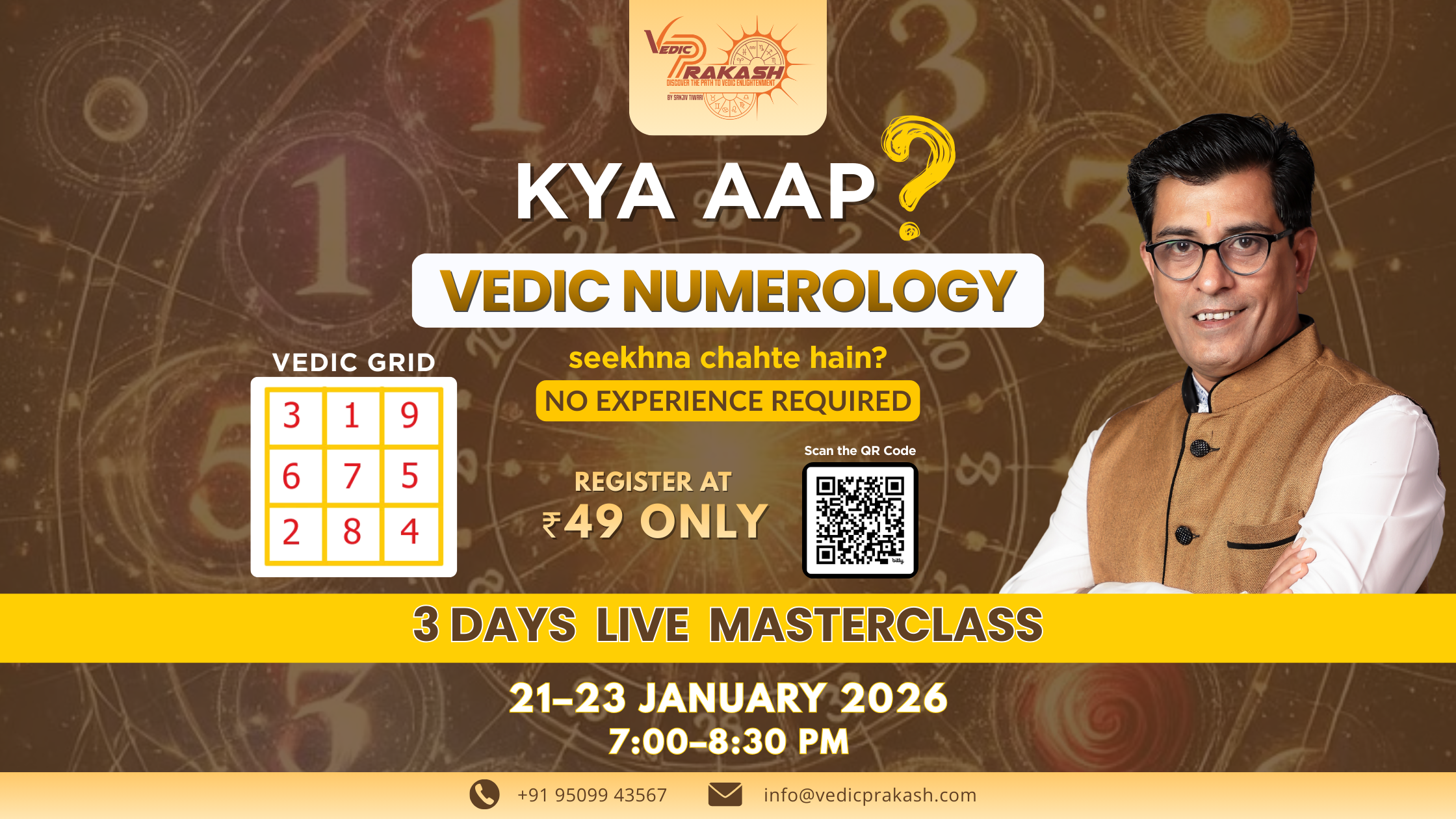
The January 2026 webinar: the immediate commercial objective
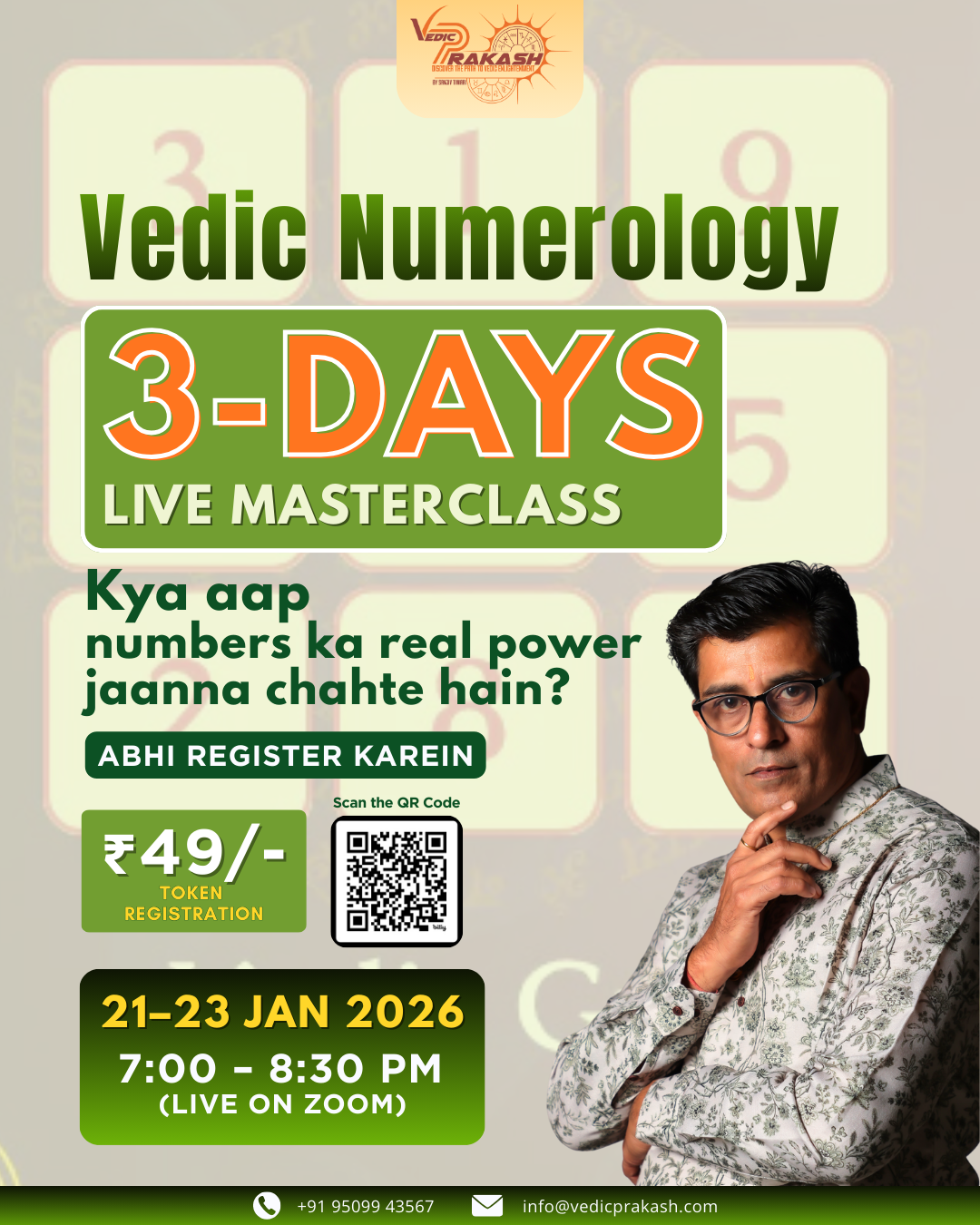
The major campaign centred on a three-day Vedic Numerology webinar scheduled for 21–23 January 2026. A registration commitment step was part of the intended customer journey. Attendance targets and commercial terms remain confidential.
Advertising allocation was reviewed against the approaching event dates and acquisition objective. Recommendations considered timing, campaign readiness and the follow-up needed to support participation. Budget discussions and approved amounts remain confidential.
The additional spend was intended to produce both potential participants and enough campaign information to assess whether the journey was functioning. It was not a substitute for understanding conversion quality.
Early campaign response showed interest, while subsequent progression still needed to be assessed. Enquiry generation was not treated as proof of confirmed attendance.
Educational work samples below illustrate the original content approach.
The review considered enquiry response, follow-up engagement and progression toward commitment as separate stages. Detailed commercial figures remain confidential.
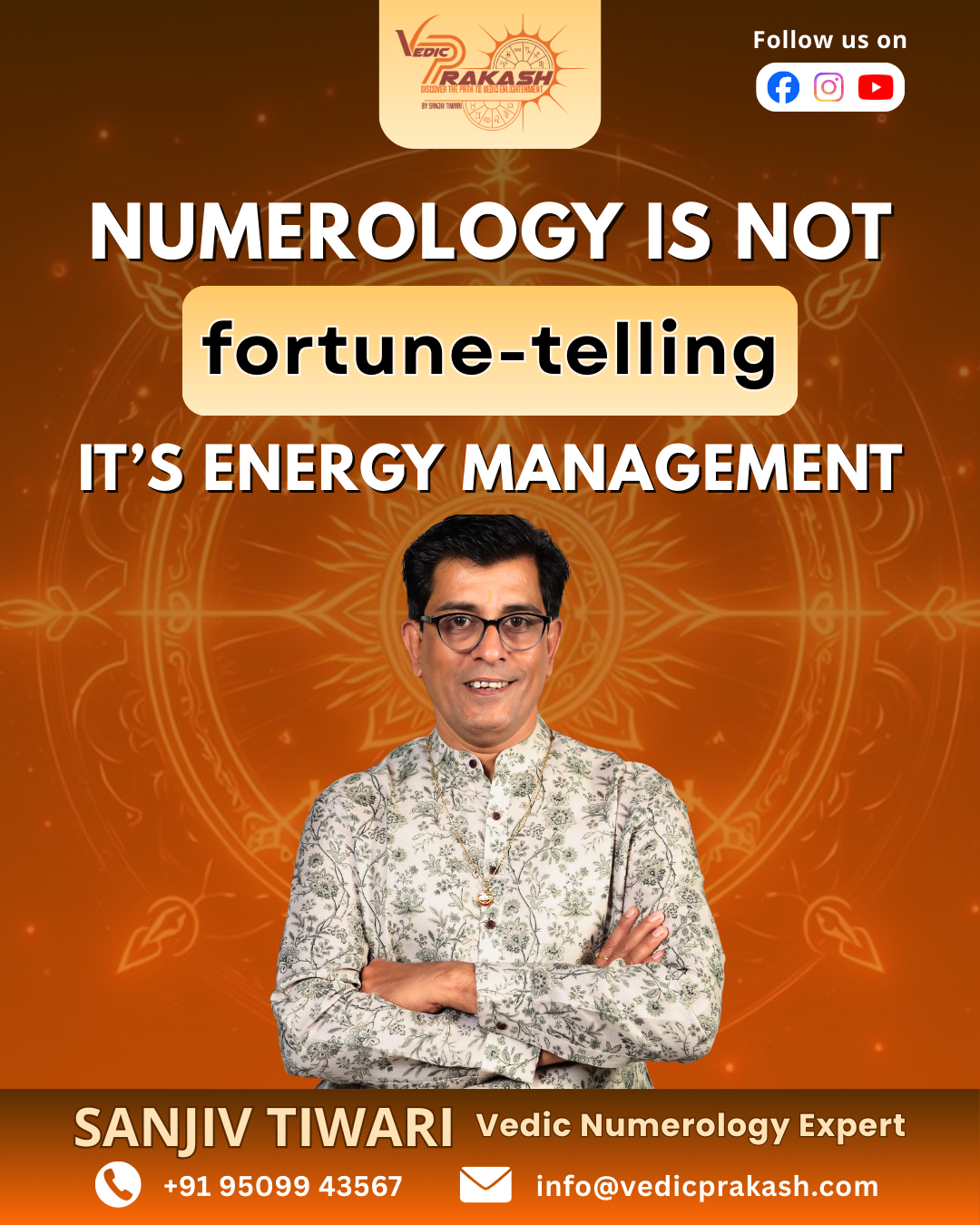
Original social and advertising creatives
Campaign video from the project archive
A moving introduction to the learning experience
The original portrait-format reel brought the instructor, subject and webinar invitation into a short mobile-oriented format.
Presenter-led communication. The instructor’s presence helped give the educational offer a recognisable human identity.
Consistent campaign language. The video complemented the static promotional and educational artwork shown above.
A work sample in context. This is historical creative material. The case study keeps creative execution separate from private delivery, expenditure and conversion reporting.
What the campaign data showed at the review point
The review considered enquiry response, community engagement and progression toward commitment as separate stages.
The key reported snapshot was recorded around 16 January 2026, before the scheduled webinar. The data separated standard leads from a smaller higher-intent segment and also examined the payment and community stages.
The historical review represents an interim assessment, rather than final registration, attendance or revenue outcomes. Detailed acquisition costs and conversion reporting remain confidential.
The review highlighted a difference between initial interest and readiness to commit. This informed a more considered approach to education, credibility and nurturing, without publishing detailed payment or conversion outcomes.
Enquiry activity alone could not establish commercial success. The review informed a closer examination of the next commitment step without attributing final webinar outcomes to an interim snapshot.
The diagnosis: the bottleneck moved beyond advertising
The lead metrics suggested that a segment of the audience was curious about the topic. But the campaign did not establish that this audience was ready to make a payment, however small. That gap prompted a reassessment of the customer journey.
In an expertise-led education category, a new prospect may want to understand the teacher’s background, experience the style of instruction, see practical examples, evaluate the value of the proposed learning and know what happens after payment. Asking for a token too early can reveal friction arising from limited familiarity, unclear value, follow-up gaps or other factors that the lead count alone cannot explain.
The working diagnosis was a trust and customer-journey gap, not simply a shortage of impressions or a high cost per lead. The available record supports that strategic interpretation; it does not isolate a single experimentally proven cause for each individual’s decision not to pay.
The important consulting decision was therefore to stop treating additional lead volume as the automatic answer. More of the same enquiries would not necessarily resolve the missing progression from interest to commitment.
The recommended shift: educate, demonstrate, then ask for commitment
The earlier assumed journey was short:
Meta advertisement → Enquiry → Registration commitment → Webinar
The recommended direction introduced the stages needed to help someone assess the offer:
Discovery → Useful education → Instructor credibility → Nurture/community → Live learning experience → Appropriate paid programme
Each stage had a role. SEO content and YouTube could help explain the subject. Social posts could demonstrate consistent expertise and introduce the teacher. A WhatsApp community could support reminders, explanations and questions for people who opted to join. A webinar or demo class could provide a direct experience of the teaching style before a larger commitment.
This was a strategic redesign proposed in response to the data. The historical record documents the recommendation and the reasoning behind it; it should not be read as proof that every proposed stage was subsequently implemented or that the redesigned funnel achieved a quantified sales result during the engagement.
WhatsApp: two different stages of intent
Opted-in WhatsApp participation provided an intermediate signal of engagement. Community participation remained distinct from confirmed participation, and detailed audience figures remain confidential.
The proposed follow-up structure distinguished:
- Interested prospect community: An opt-in place for education, event reminders, questions and information before a paid commitment.
- Confirmed participant group: A separate group or journey for those whose payment or registration had actually been confirmed.
The team also examined approved WhatsApp Business API options for acknowledgements and reminders. A practical constraint was explicitly recognised: people should not be assumed to be automatically added to WhatsApp groups without the required action and consent. The purpose of automation was to support communication, not to bypass participation or permission.
Repositioning the webinar as a learning and authority asset
Once the payment drop-off became visible, the January webinar was no longer best judged only as an immediate revenue event. The project recommended treating it as a potential teaching and authority-building asset as well.
A useful event could produce demonstrations, questions, teaching clips, future educational posts, testimonials where consented and material for later nurturing. That does not make disappointing direct conversions disappear. It offers a practical way to recover learning and reusable content from the activity rather than viewing the entire effort through a single ticket-sales number.
A later website observation included a live demo-class step. It was consistent with the recommendation to let learners experience the instructor before a larger commitment, but is not attributed as an implemented result without a documented connection.
What the engagement actually demonstrated
Audience interest was observable through Meta enquiry activity. It was evaluated separately from readiness to participate or purchase.
Lead costs were measurable but not self-explanatory. Different ad and lead structures returned different CPL ranges, highlighting the need to distinguish inexpensive enquiries from higher-intent prospects.
Progression required closer review. The diagnosis examined the registration commitment step separately from initial enquiries, while detailed conversion outcomes remain confidential.
WhatsApp provided an intermediate engagement stage between an initial enquiry and a participation decision.
The recommended strategy changed. Educational content, instructor credibility, community communication and direct teaching experience were prioritised as steps that could precede a larger commercial commitment.
Technical realities mattered. Website access and migration constraints influenced what could reasonably be completed while the broader marketing effort continued.
The documented result is therefore a funnel diagnosis and strategic correction, not a claimed final revenue turnaround or an unqualified advertising success.
Role of Hemant Kumar Sharma / Enovate Digital
The engagement combined digital strategy, website conversion planning, SEO and educational-content direction, YouTube optimisation, Meta Ads planning and management, advertising-budget recommendations, webinar promotion, lead-quality interpretation, WhatsApp funnel planning and customer-journey diagnosis.
The value of that combined role emerged when the campaign’s lead-generation numbers were not enough. Looking only at the advertising dashboard could have encouraged higher spending. Looking at the prospect’s next action revealed a different problem and a more appropriate strategic response.
The wider marketing lesson: measure the next meaningful action
For businesses selling knowledge, expertise or a high-consideration service, a qualified marketing report needs more than reach, clicks and leads. It needs to ask what proportion of prospects understood the offer, joined the next stage, attended, paid or progressed to the intended programme—and where the sequence broke.
The Vedic Prakash assignment showed why platform activity and commercial progress must be reported separately. A low CPL is a useful starting observation, not evidence of a successful customer journey.
The central lesson was to distinguish interest from purchase readiness. That distinction shifted the discussion toward credibility, learning experience and a more supportive customer journey.
The lesson: generating enquiries is one task; helping the right people make a confident commitment is another. A sound digital strategy needs to address both.
Generating leads, but not enough customers?
When advertising produces enquiries but too few people move to the next stage, the answer may lie in offer clarity, education, customer trust, follow-up or website conversion—not simply in a larger media budget.
Review the wider Case Studies Library or explore a digital marketing consultation with Hemant Kumar Sharma to examine the full customer journey, not only the advertising report.
Case study context: This article draws on the reviewed historical project records covering late 2025–early 2026. Public discussion focuses on approach and learning; detailed budgets, acquisition costs, audience volumes and conversion outcomes remain confidential. Recommendations and later observations are distinguished from completed work.
Need Better Direction for Your Business Growth, Online Presence or Marketing Decisions?
Whether you need expert consultation, mentoring guidance, structured training or professional execution support, the next step should be clear, practical and commercially meaningful.
Choose the next step that fits you best
This strategic session gives you the deep clarity that most businesses lack. Instead of guessing, testing randomly, or wasting money on disconnected marketing, after attending you walk away with a clear, structured roadmap that eliminates confusion and provides a step-by-step action plan to move forward confidently.