The project at a glance
The website as a public reference point
The assignment was to translate NGO activity into a usable website
An NGO may carry out substantial charitable and educational work, yet still struggle to explain its activities to someone discovering it online for the first time. The needs of a prospective volunteer, donor, beneficiary or institutional partner are different, but all need reliable answers: who runs the organisation, what it does, where it operates, how its programmes work and how to make contact.
That was the starting point for the website engagement with Yug Purush Swami Vivekananda Educational & Social Welfare Society, based in the Udaypur/Rajnagar area of Chhatarpur district, Madhya Pradesh. The organisation describes programmes in education, healthcare, skill development, women and child welfare, rural development and related social initiatives. It traces its establishment to 27 December 2010.
For Enovate Digital and Hemant Kumar Sharma, the brief was practical: establish an organised, credible, navigable web presence that could present these activities without forcing visitors to reconstruct the organisation from scattered photographs, programme notes or informal messages.
A defined proposal and authorised start
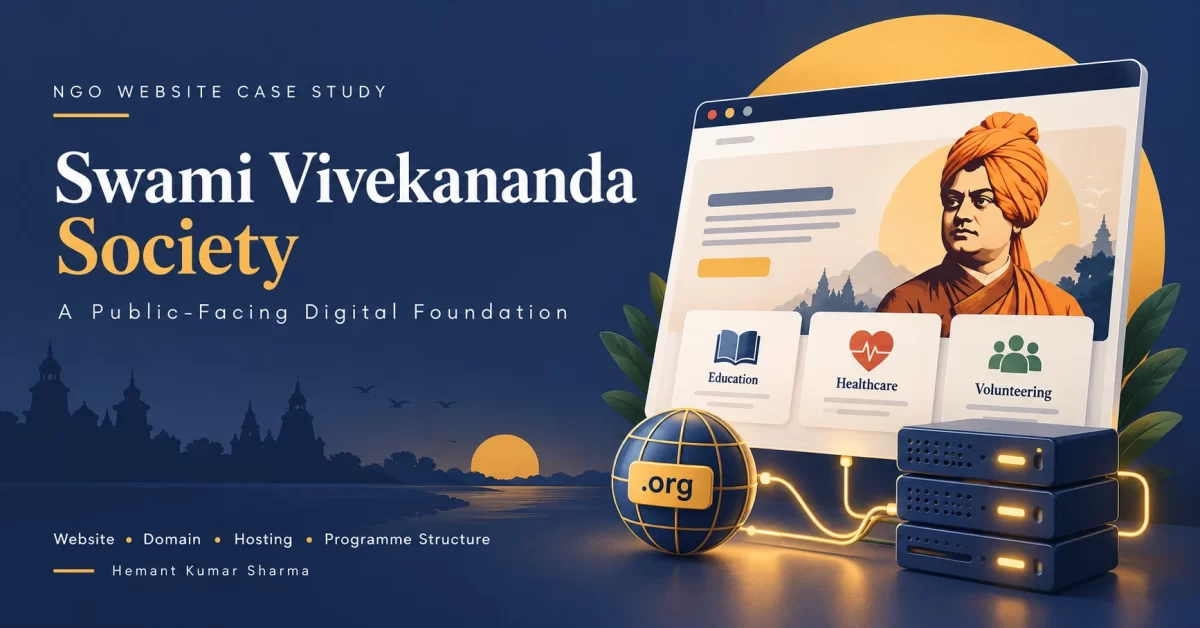
The documented proposal was dated 19 December 2024. It described three foundational services: registering a domain in the organisation’s name, configuring Linux/cPanel hosting, and designing an SEO-oriented website using approved information and photographs. The proposed experience was intended to improve public visibility, explain welfare activities and support volunteering and donation awareness.
On 6 January 2025 the Society’s president responded with explicit approval to proceed. The subsequent planning emails requested the organisation’s name and domain choice, logo, mission and vision, project descriptions, photographs, donation and contact details, design preferences and authorised reviewers.
That intake process mattered because a non-profit website carries information that should come from the organisation itself. A service provider can structure the experience, but details of programmes, financial contribution arrangements, registrations and representation of beneficiaries require responsible input and approval.
The documented delivery timeline
Phased execution: infrastructure first, refinements next
The project was organised into three stages: domain and hosting plus content consolidation; an initial website design and review; and finalisation with approval and delivery. The original six-week schedule was expressly dependent on timely content and decisions rather than a guaranteed launch date.
Project correspondence records Phase 1 and Phase 2 as completed by 11 March 2025. Later discussions concentrated on expanding and refining content across programmes and supporting sections. Requests covered clearer programme descriptions, organised image folders, certificates and review instructions, so the web team could place material in the correct sections.
The useful operational learning is that multi-stakeholder NGO websites benefit from a single structured content process, named approvers and explicit change tracking. On 5 August 2025 the service provider issued its formal completion confirmation, stating that the website was live, functional and publicly accessible. This is a provider-issued completion record, not a separately signed client-acceptance document.
Organising the organisation’s work into visitor journeys
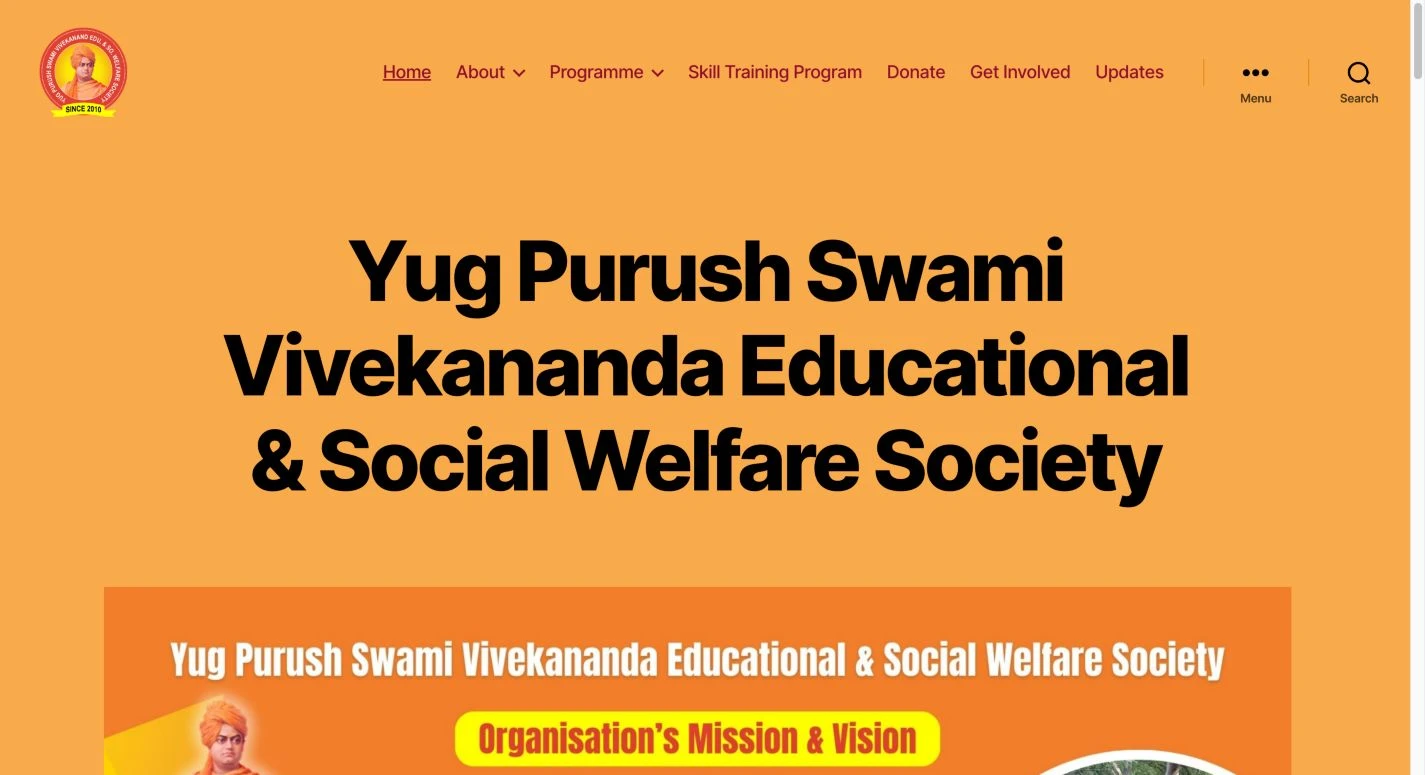
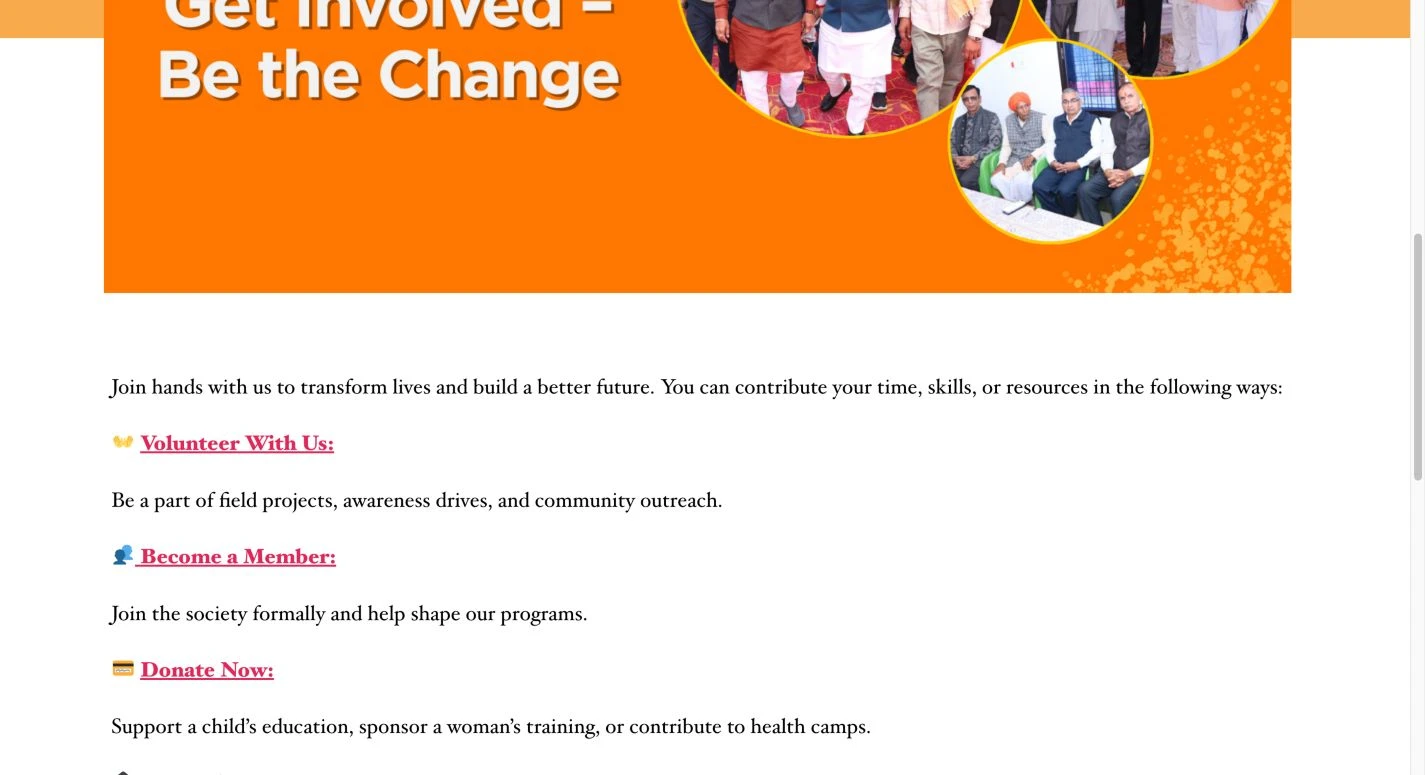
The finished public website is not limited to an About page. Its navigation includes programmes for food and nutrition distribution, medical camps, mass marriage assistance, a traditional Gurukul education initiative, water service and conservation, agricultural work, and skill training. It also provides About, Donate, Get Involved, Updates and Contact routes.
This structure lets a visitor begin with the social issue of interest and move towards the relevant programme, rather than encountering a long undifferentiated list of charitable activities. Programme pages also give the organisation a place to publish photographs and explanations in context.
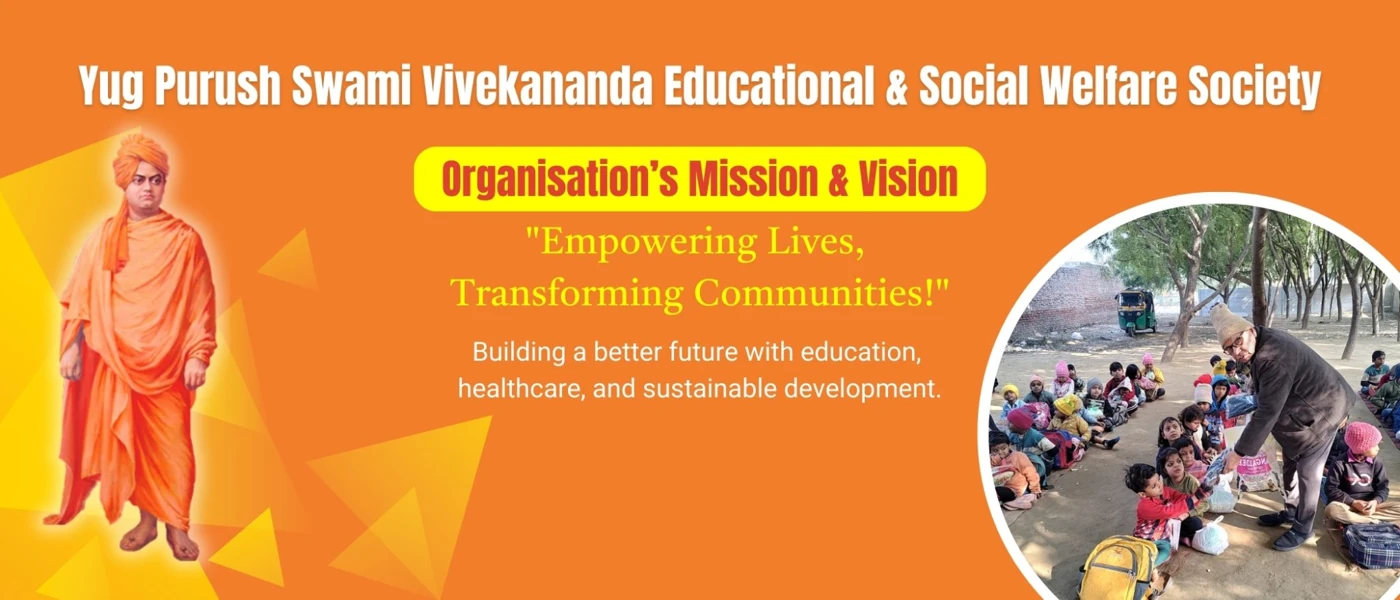
The site’s introductory content presents its origins and mission, while its contact and participation pages support volunteering, donations and institutional collaboration. Its own published activity counts and registration details are statements by the NGO; they are not campaign outcomes attributed to the website developer.
Mission and programme presentation
Separate ways to participate
Domain, hosting and the maintenance commitment
Web design was only one part of the engagement. The accepted proposal included the domain and Linux/cPanel hosting, while the later closing communication described annual maintenance from the second year comprising domain renewal, hosting with SSL, and minor technical changes.
These infrastructure tasks are easy to overlook in a case study because they do not produce attention-grabbing advertising charts. For an NGO, however, reliable public access to programme information and contact details is the foundation on which every other digital channel depends.
The site remains publicly accessible in 2026, and its footer carries a management credit referencing Hemant Kumar Sharma. The available records document the support arrangement but do not provide an independently measured uptime percentage, year-by-year renewal receipts or a measured SEO ranking improvement; those figures are intentionally not claimed.
What the completed project demonstrates
The principal outcome is a functioning, accessible NGO website with defined navigation and multiple programme and participation pathways. The case documents an approved assignment, a phased implementation, a practical approach to gathering complex organisational information and the service provider’s written completion confirmation.
It also demonstrates a recurring consulting responsibility: helping a client separate its internal knowledge from information that outside visitors can quickly understand. The work required a delivery process as much as design skill—content intake, page organisation, reviews, approvals and technical stewardship.
There is no basis in the project file for claiming that a particular donation amount, volunteer total or organic-search growth resulted from this website. Its documented value is public presentation, information architecture, technical foundation and continued accessibility.
The wider lesson for social-sector websites
A non-profit website needs to make the mission legible. Registration information and service activity must have context; programmes should be easy to find; and a visitor should understand how to ask a question, become involved or find official donation instructions.
The Swami Vivekananda Society engagement shows how domain infrastructure, website development, content preparation and clearly governed approvals can combine into one practical NGO digital-presence project. The result is not a promise of instant fundraising success, but a stronger and more dependable public reference point for the organisation.