
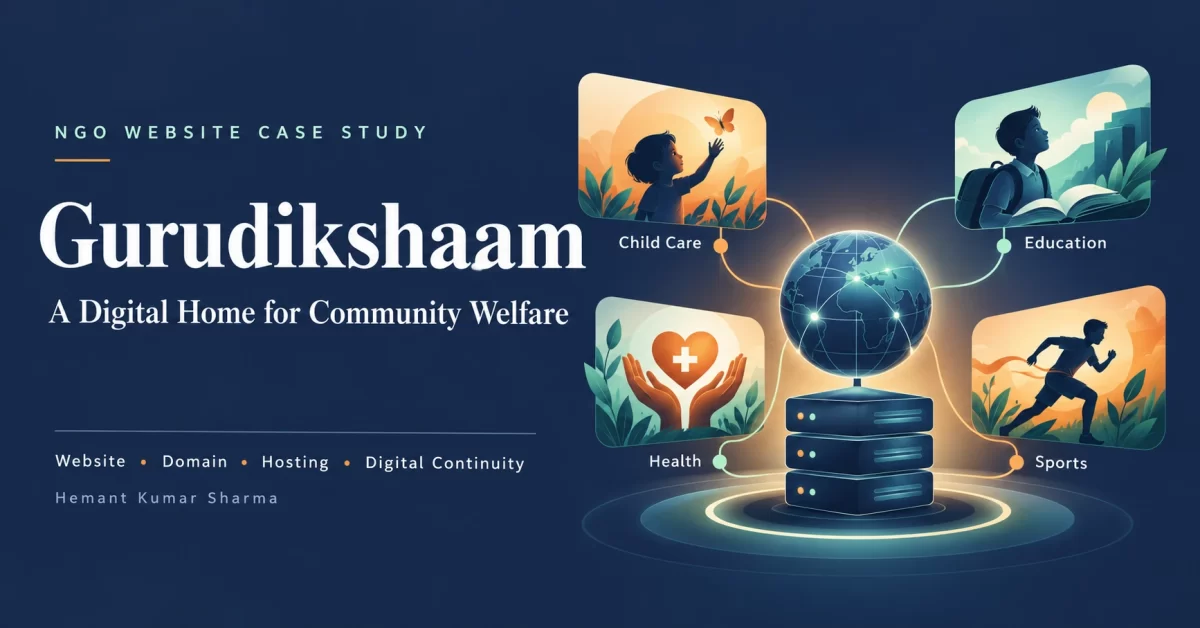
The project at a glance
A recognisable digital home
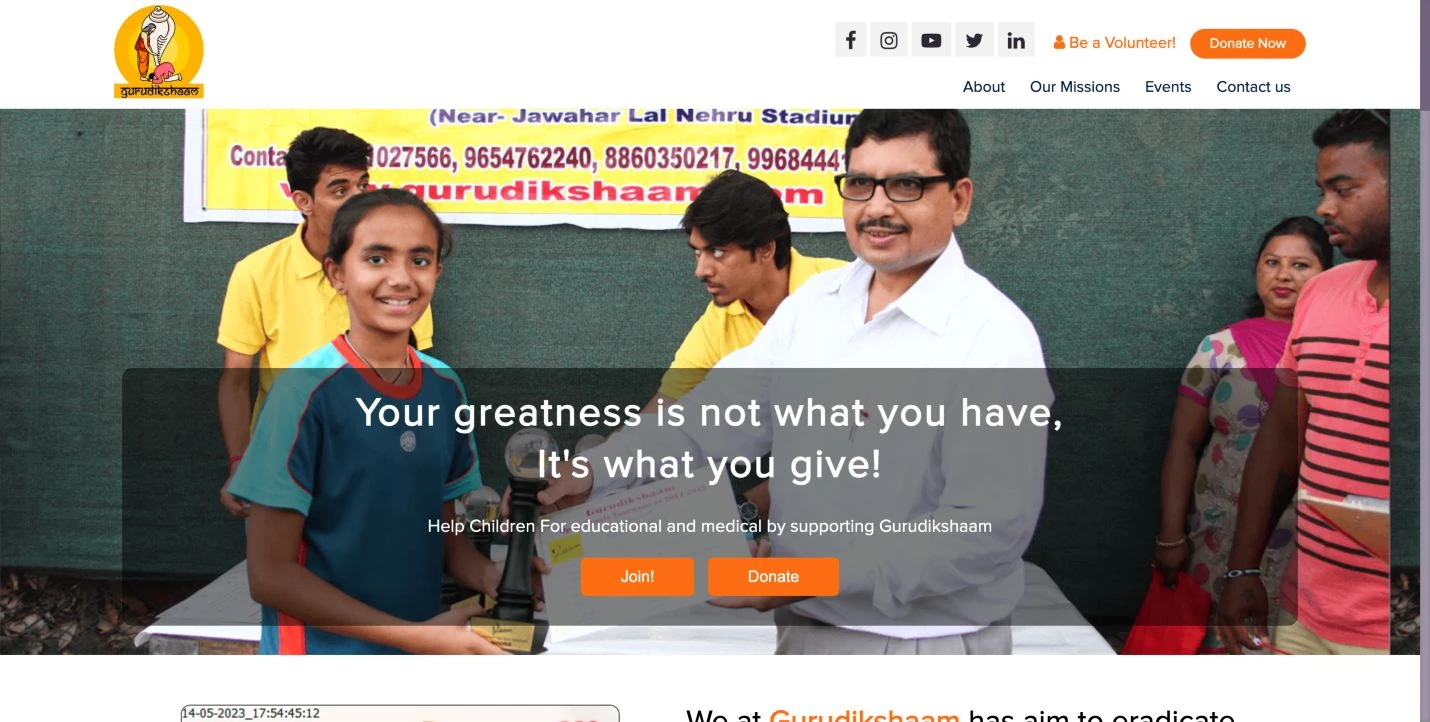
A long-standing web identity for a community-focused NGO
Not every digital case study should begin with an advertising campaign. For a community organisation, a stable website can perform a quieter but essential role: it gives the organisation a consistent address, a place to describe its work, and a route for supporters to understand how they can participate.
Gurudikshaam is a Delhi-based non-profit whose published mission focuses on social welfare, education, child care, health and community participation. Its website identifies Rakesh Kumar Sharma as a leading figure in the initiative and presents the organisation’s work through programme information, events, articles and engagement options.
The association described by Hemant Kumar Sharma includes website design, domain arrangements, hosting and the maintenance of the organisation’s online presence. The live Gurudikshaam website includes a footer attribution, “Powered By Enovate Technologies,” linking to hemant.co.in. That provides public evidence of a technical and web-development connection, without by itself identifying the exact year each service began.
Why the website mattered
Charitable organisations speak to several audiences at once. Parents or beneficiaries want to know which services exist. Volunteers want to see where their time can be used. Donors want to understand the causes and legitimate ways to make contact. Members of the public need basic confirmation that the organisation exists and how it can be reached.
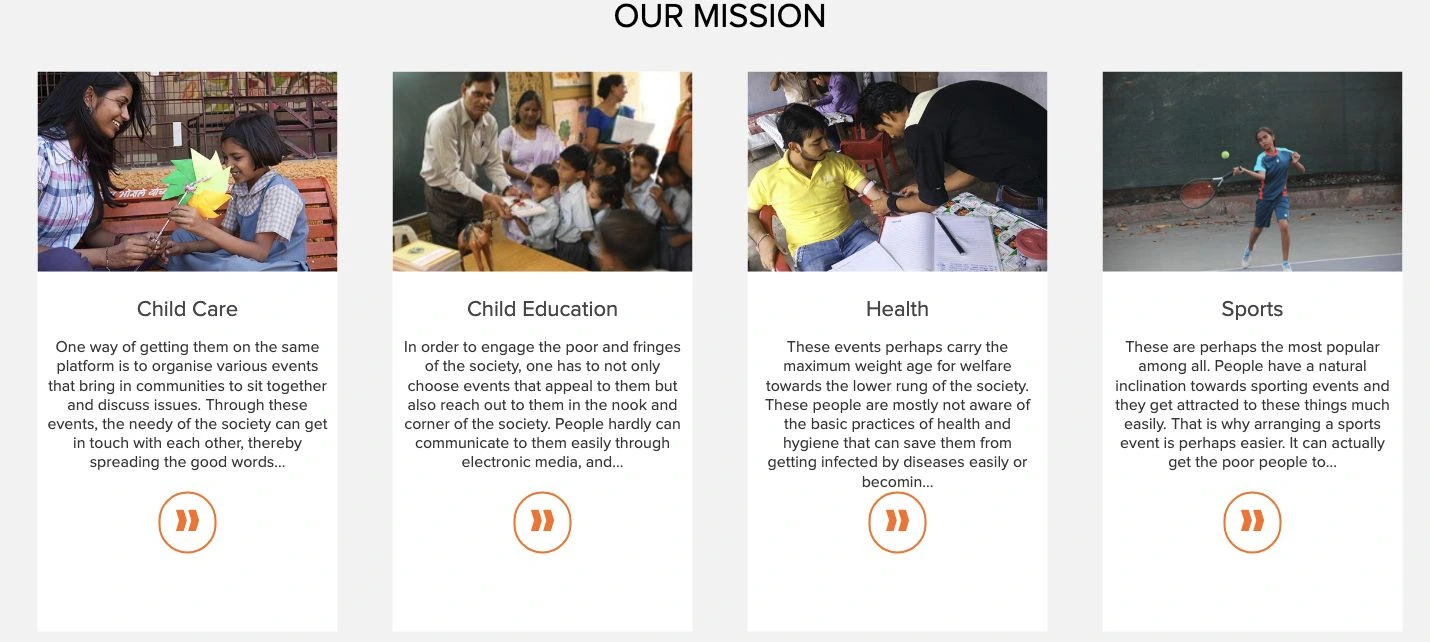
For Gurudikshaam, those different needs are gathered within one recognisable web identity. The site introduces its mission and provides routes into four primary areas: child care, child education, health and sports. It also provides navigation to organisation details, management, members, certificates, events, blog posts and contact information.
This type of information architecture is especially useful to an NGO because the visitor may not arrive with a single commercial purpose. Some people are looking for assistance; others want to volunteer or contribute. The website must help both without treating every visit as a direct sales conversion.
Making the organisation’s mission navigable
Gurudikshaam’s four programme areas give its work a simple structure. Child care content discusses bringing communities together and supporting people who need assistance. Education content centres on outreach to people who may have limited access to conventional information and resources. Health content discusses awareness and camps; sports provides a participation-oriented community activity.
The website also contains overview content and information about the management team and certifications. These sections are not merely decorative. They help new visitors understand the identity behind a charitable initiative before deciding whether to contact or support it.
The published event and blog sections provide room for activity records, educational explanations and updates. Their existence demonstrates an editorial structure; the available materials do not establish a specific publishing frequency, number of campaigns delivered or measured growth attributable to those pages.
Four programme themes, clearly presented
Donation, volunteering and contact as separate journeys
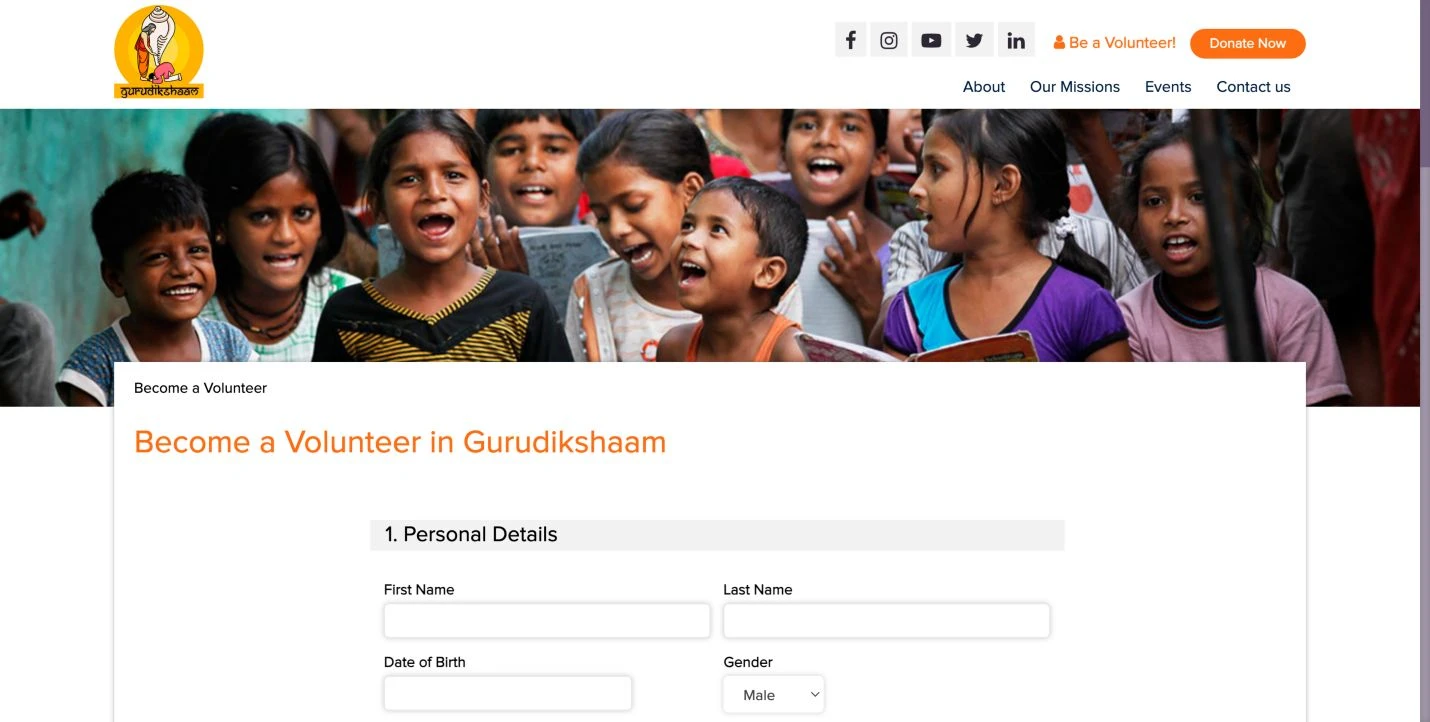
A practical NGO site must distinguish between someone who wants to offer time, someone who wants to contribute financially and someone who simply needs to contact the organisation. Gurudikshaam’s homepage includes separate Donate, Be a Volunteer and Contact pathways.
The page also presents FAQs explaining how interested people can participate in volunteering or donation programmes. This helps set expectations, although the existence of an online button or FAQ should not be confused with a verified end-to-end payment conversion or volunteer application result.
The wider design lesson is that a well-organised charity website provides information and next steps for different kinds of visitor. These pathways are part of its digital usefulness even when the organisation does not report conventional marketing KPIs.
An identifiable volunteer route
Domain, hosting and technical continuity
The project owner identifies domain management, website hosting and continuing digital-presence support as part of the professional relationship. These services matter because public contact routes and programme descriptions need to remain available outside the schedule of individual events.
A domain gives the NGO a stable identity; hosting makes its website accessible; and ongoing technical attention can help preserve contact information, layout and content availability as web infrastructure changes.
The live site’s Enovate Technologies credit is a visible and specific association. Available background records support the professional association, but they do not by themselves establish advertising execution or performance gains.
The precise start date of hosting, renewal history, hosting performance and individual technical changes are not established in the available email sample. Accordingly, this case study discusses continuity as a service responsibility, not as a fabricated uptime statistic or an invented year count.
What the project can credibly claim
The documented public-facing outcome is a recognisable NGO website containing mission information, four welfare themes, involvement pathways, contact information, event and editorial sections, and visible Enovate attribution.
That is a useful result in its own right. The digital infrastructure gives the organisation one location in which its various initiatives can be explained and a visitor can decide what to explore next.
Gurudikshaam’s homepage also publishes numerical statements about volunteers, donors and related impact. Those are claims by the organisation about its wider work, not metrics generated by the website provider. They are therefore not used as proof of marketing performance or fundraising return in this case study.
The consulting lesson: usefulness before vanity metrics
The long-term value of a non-profit website often lies in continuity and clarity. A campaign can send people to a social post for a few days. A stable website can continue to answer questions about the organisation’s mission and contact routes long after an individual post or event has passed.
This project illustrates the importance of treating domain, hosting, information architecture and maintenance as one connected responsibility. For organisations with limited technical staff, a coherent and dependable public website can become an important organisational reference point.
The outcome should be described precisely: an established digital identity supported by website and infrastructure services, not an unverified claim of donor growth, successful Meta Ads campaigns or revenue generation.