
Introduction
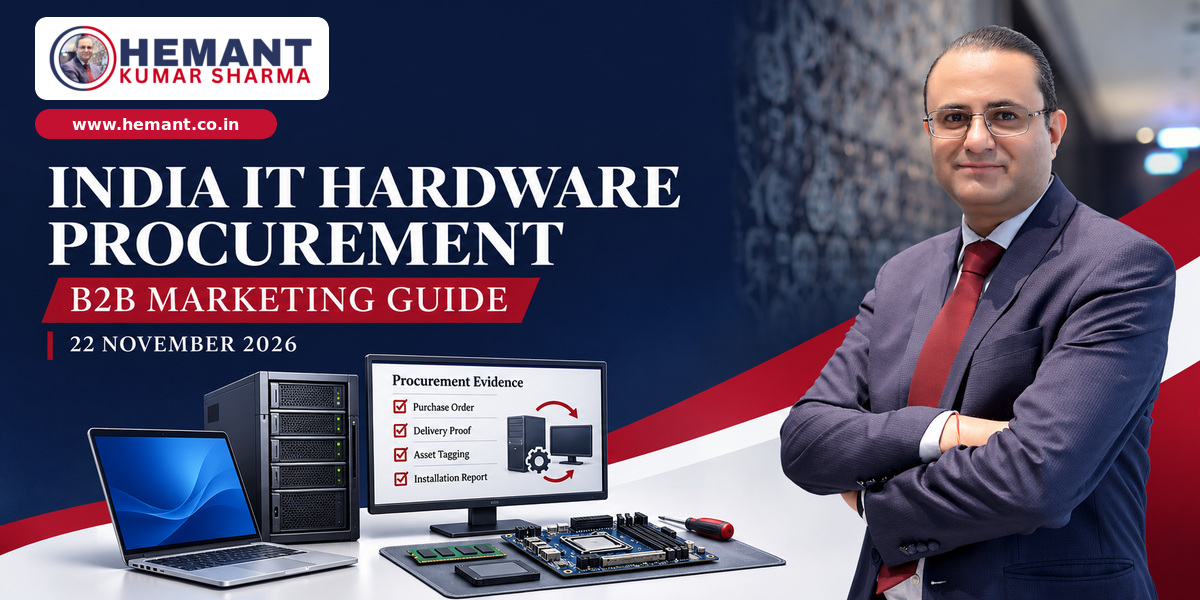
Government procurement mein “Made in India” likh dena ab aur bhi clearly insufficient hoga. MeitY ne six IT-hardware categories ke liye Local Content / Domestic Value Addition calculation methodology revise ki hai. New approach process-oriented aur Bill of Materials based hai: India mein actual assembly, domestic components, testing, R&D, product design aur intellectual property ko evidence ke saath map karna hoga.
20 November 2026 ko PIB ne revision announce ki. It covers desktop and all-in-one PCs, laptops, thin clients, servers, monitors and interactive flat-panel displays. Framework Official Gazette publication ke six months baad effective hoga and 7 September 2020 methodology ke corresponding provisions replace karega.
Manufacturers, OEMs, distributors, system integrators aur B2B marketing teams ke liye yeh sirf compliance update nahi hai. Product-page claims, tender documents, partner decks, sales enablement, SEO content and lead qualification ko same verified evidence base se operate karna hoga. Unsupported localisation percentage ya vague “Indian technology” claim commercial and reputational risk create kar sakta hai.
Revised framework mein kya badla?
Six product categories
- Desktop PCs and All-in-One PCs
- Laptop PCs
- Thin clients
- Servers
- Computer monitors
- Interactive Flat Panel Displays
These categories have different component structures and manufacturing paths. Marketing team ko one-size-fits-all localisation message use nahi karna chahiye. Har product family ke liye eligible process, evidence and claim boundary separately document karein.
Bill of Materials based calculation
MeitY’s revised method process and component contribution ko recognise karta hai. Official announcement specifically motherboard assembly through Surface Mount Technology, domestic bare PCB sourcing, RAM and SSD assembly/testing/packaging, display assembly, domestic chassis and power modules, and final assembly/testing mention karta hai.
Practical implication yeh hai ki value addition story final assembly location tak limited nahi rahegi. Procurement reviewer ko dekhna hoga ki product value chain ke kaunse stages India mein perform hue, kaunse inputs domestic hain and each claim ka documentary support kya hai.
R&D, design and Indian IP ko weightage
Framework eligible in-house R&D undertaken in India ko recognise karta hai and Indian product design plus intellectual property rights ko additional weightage assign karta hai. This creates an important distinction between imported reference design assembled locally and a product whose engineering, design ownership or IP contribution India-based hai.
Standardised self-certification
A standard DVA calculation and self-certification format objective assessment aur verification support karne ke liye introduced hai. Self-certification marketing permission slip nahi hai; claim ko underlying records, supplier documents, process evidence and internal sign-off se traceable hona chahiye.
What the revised framework means for your business
Confirmed: PIB/MeitY announcement 20 November 2026 ko published hua. It identifies six product categories, a process-oriented BoM-based DVA method, recognised India-based manufacturing processes, weightage for eligible in-house R&D, additional weightage for Indian design/IP and a standard self-certification format.
Confirmed timing boundary: Revised methodology Official Gazette publication ke six months baad effective hogi. PIB release specific future calendar date provide nahi karta; therefore businesses ko Gazette notification date verify karke compliance calendar calculate karna chahiye. 20 November press-release date ko automatically effective-date anchor assume na karein.
Analysis: Better documented local value addition government tenders ke bahar bhi buyer trust, enterprise procurement and channel-partner conversations strengthen kar sakta hai. Lekin higher DVA score alone product quality, cybersecurity, after-sales coverage, delivery capacity or tender win guarantee nahi karta.
Indian B2B marketing par direct impact
Website claims ko evidence architecture chahiye
“Designed in India,” “manufactured in India,” “assembled in India,” “Indian IP” aur “domestic components” interchangeable phrases nahi hain. Product page par exact scope define karein. For example, motherboard SMT India mein hai to wahi claim karein; imported display panel ko domestic display manufacture imply na karein.
Tender SEO aur content ko buyer questions answer karne chahiye
Government and enterprise buyers search karte hain: local content percentage, certifications, service network, production capacity, warranty, compatible standards, delivery geography and OEM authorisation. SEO content ko press-release rewrite na banayein. It should organise verifiable answers without exposing confidential supplier contracts.
Sales decks ko product-family level proof chahiye
Corporate deck mein company-wide localisation claim dena tempting hota hai, but procurement product model evaluate karta hai. Sales kit mein model number, manufacturing site, eligible processes, certification period, authorised signatory and evidence owner map karein. Outdated brochure ko current tender response mein reuse na karein.
Channel partners ke claims control karein
Distributor aur reseller often manufacturer copy shorten karke stronger claim bana dete hain. Partner portal mein approved claim library, current certificates, expiry alerts, do-not-say examples and escalation contact provide karein. Co-branded ad ya marketplace listing bhi procurement evidence se inconsistent nahi honi chahiye.
Lead generation ko tender readiness score se qualify karein
Every government-related enquiry equal opportunity nahi hai. Lead form mein product category, quantity, delivery location, buyer type, required certifications, tender deadline, local-content condition, service SLA and budget stage capture karein. Sales team early stage mein disqualify kar sakegi where eligibility or evidence missing hai.
Evidence-led content system kaise banayein
1. DVA claim register
Har claim ke liye product/model, exact wording, eligible process, data source, owner, approval date, validity and public-use status record karein. Marketing copy only approved register se publish ho.
2. Component and process evidence library
- Bill of Materials and supplier declarations
- Manufacturing process records and plant-location evidence
- Quality testing and final-assembly records
- R&D team, project and eligible expenditure documentation
- Design ownership and IP records
- Self-certification and independent verification correspondence
Public website par confidential files upload karna necessary nahi. Marketing claim ko internal evidence ID se link karein so legal, procurement and sales teams quickly verify kar saken.
3. Public product proof page
Each priority product family ke liye a concise proof page useful ho sakta hai: what is made or assembled in India, what is designed locally, certification scope, applicable period, service footprint and contact route. Unsupported percentage, award logo or government endorsement imply na karein.
4. Content approval workflow
Marketing writer → product engineering → procurement/compliance → legal → authorised publisher sequence define karein. Minor creative change bhi claim meaning alter kar sakta hai, so headline, image caption, infographic and meta description review scope mein hon.
30-day readiness plan
- Days 1–5: six covered categories mein apni products map karein and current public localisation claims inventory karein.
- Days 6–10: every claim ke supporting BoM, manufacturing, R&D, design and IP evidence owner identify karein.
- Days 11–15: unsupported, ambiguous or outdated website, brochure, marketplace and partner claims pause or correct karein.
- Days 16–20: model-level proof pages, tender FAQ and sales qualification fields draft karein.
- Days 21–25: compliance, engineering, sales and partner teams ke saath claim simulation run karein.
- Days 26–30: Gazette publication date verify karke six-month effective-date calendar, audit cadence and launch priorities approve karein.
What not to claim
- “100% Indian” without model-level component and process evidence
- Government approved or endorsed when only methodology eligibility/self-certification applies
- R&D in India when work is outsourced or records do not meet eligibility
- Indian IP when ownership or licence scope is unclear
- Guaranteed tender preference, purchase order or revenue based on DVA alone
Conclusion
Revised IT-hardware DVA methodology B2B marketing ko slogan se proof ki taraf push karti hai. Strong manufacturer wahi hoga jo product engineering, procurement evidence and public communication ko one controlled system mein connect kare. Search visibility, sales collateral and partner promotion tabhi durable advantage banenge jab claims model-specific, current and auditable hon.
Apne IT-hardware products ke liye buyer-focused proof pages aur search visibility improve karna chahte hain? Hamari SEO agency services explore karein. B2B positioning, content priorities aur lead qualification plan ke liye strategic consultation book karein.
Sources
Press Information Bureau / MeitY, “MeitY Revises Public Procurement (Preference to Make in India) Order 2020, For Six IT Hardware Products To Promote Domestic Manufacturing,” published 20 November 2026: https://www.pib.gov.in/PressReleasePage.aspx?PRID=2339142&lang=1®=3
Note: PIB states the revised methodology becomes effective six months from publication in the Official Gazette. Verify the Gazette notification date before calculating the operative deadline.