
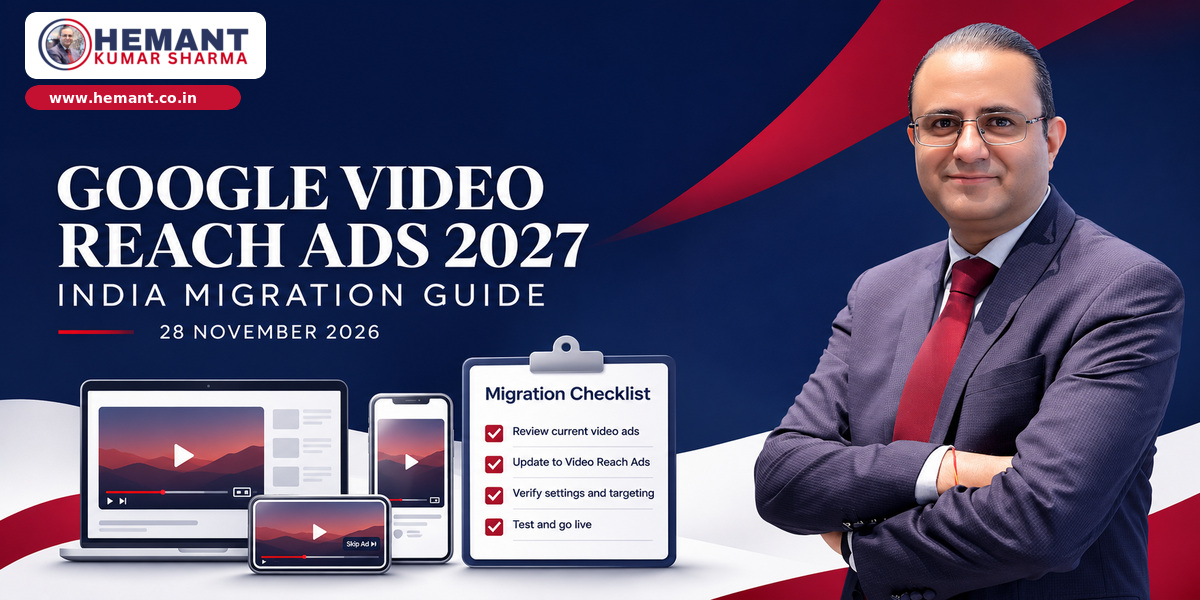
Google Ads video teams ke paas March 2027 se pehle ek important housekeeping project hai. Google ki official Help documentation ke mutabik, 15-second aur 20-second standard non-skippable Video Reach Campaigns ko March 2027 se gradually multi-format responsive non-skippable ads mein auto-upgrade kiya jayega. Migration 2027 ke through phase-wise chalegi.
Ye sirf ad-format label change nahi hai. Campaign settings aur campaign-level history retained reh sakti hai, lekin ad-group aur ad-level history reset hogi. New ads policy review se dobara guzrenge. Business name aur logo required assets honge. Jo teams reporting continuity, creative readiness aur approval risk ko abhi plan karengi, unke liye transition smoother hoga.
Exactly kya change ho raha hai?
Google’s migration page, accessed 28 November 2026, says the automatic upgrade will start in March 2027. It applies to standard non-skippable Video Reach Campaigns using 15-second or eligible 20-second ads.
Upgraded setup multi-format responsive non-skippable ads support karega. Google lists:
- 6-second bumper ads;
- 15-second non-skippable ads;
- 20-second non-skippable ads in eligible markets and for eligible customers;
- 30-second connected-TV placements.
The campaign’s budget type, Target CPM bid strategy, flight dates, targeting and campaign-level history are expected to carry over. The original ad group will be paused for seven days and then deleted. New ad group and ads will be created, which means their historical performance starts fresh.
Migration ko “automatic, so no work required” kyon na samjhein?
Automation configuration move kar sakti hai; business context validate nahi kar sakti. Logo outdated ho sakta hai, business name inconsistent ho sakta hai, landing page promotion expire ho sakti hai ya creative current policy review mein fail ho sakta hai.
Ad-group history reset ka reporting impact bhi real hai. Campaign totals retained hone ke bawajood ad-level trend lines break ho sakti hain. Agar marketing team migration date document nahi karti, April or later reporting mein new ad ka zero-history baseline performance drop ya measurement bug lag sakta hai.
March 2027 ek single global switch date nahi
Official wording says migration starts in March 2027 and rolls out through 2027. Isliye har account same day migrate hoga, aisa assume na karein. Account-level notifications, Google Ads UI and Help documentation monitor karein.
India eligibility ke baare mein precise language use karein. Google’s non-skippable Video Reach format globally available raha hai, but 20-second eligibility market/customer conditions par depend karti hai. 30-second format primarily connected-TV inventory ke context mein documented hai. Har asset har impression par serve hoga, ye guaranteed nahi.
Formats ko creative system ki tarah plan karein
Six-second bumper
Six seconds mein one message, one visual idea and one brand cue enough hai. Long setup, three benefits and disclaimer-heavy composition cram karna weak result dega. Bumper ko reminder, product signal or sequence opener ke roop mein test karein.
Fifteen-second non-skippable
15-second cut clear problem-solution, demonstration or offer narrative ke liye practical hai. Brand ko last frame tak hide na karein. Subtitle readability, audio clarity and landing-page alignment maintain karein.
Twenty-second eligibility caveat
20-second asset upload ya use karne se pehle account and market eligibility verify karein. Media plan, client promise or production brief mein universal availability claim na likhein. Same idea ka 15-second fallback ready rakhein.
Thirty-second CTV
30-second format connected-TV viewing ke liye richer story allow karta hai, but CTV screen phone se different hai. Text larger, composition cleaner and pacing deliberate honi chahiye. Remote-control environment mein direct click behaviour limited ho sakta hai, so memorable brand cues, QR code or cross-device follow-up useful test ho sakte hain. Google does not guarantee that these tactics improve performance; they are measurement hypotheses.
Required assets: business name and logo
Google says business name and logo are required for upgraded ads. Platform existing campaign data se auto-populate karne ki koshish kar sakta hai, but advertisers should not assume the output is correct.
Pre-migration asset audit:
- approved legal or customer-facing business name;
- current high-resolution logo;
- safe margins and readable mark;
- correct landing-page domain;
- current product, price and offer claims;
- rights-cleared video, music and talent;
- accurate mandatory disclaimers;
- accessible captions or on-screen text.
Agency accounts mein owner define karein. Client approval migration ke baad wait karne se ad pause or policy delay ho sakta hai.
Reporting continuity ka plan
Campaign-level history retained hona useful hai, but ad-group and ad-level reset analysis ko affect karega. Migration se pehle historical snapshot export karein.
Minimum baseline:
- campaign and ad group IDs;
- creative asset names and URLs;
- impressions, reach and frequency;
- spend and Target CPM;
- completed views or relevant video metrics;
- conversions and conversion value, where configured;
- audience, geography, device and placement breakdown;
- policy status and disapproval notes;
- reporting date range and attribution settings.
Snapshot ko immutable date stamp ke saath store karein. Migration ke baad old and new entities ko one continuous line mein merge karte waqt clear annotation lagayein. Otherwise stakeholders assume kar sakte hain ki new ad ka lifetime history old creative jitna hai.
Manual upgrade option
Google documents a copy-and-paste path for advertisers who want to upgrade before automatic migration. Existing campaign ko copy karke destination settings select ki ja sakti hain; bulk templates used by larger teams can map to the upgraded setup.
Manual upgrade ka benefit control hai: team timing choose kar sakti hai, assets verify kar sakti hai, policy review buffer rakh sakti hai and reporting annotation planned date par kar sakti hai. Risk bhi hai: careless copy duplicates budget or overlapping delivery create kar sakta hai.
Manual route choose karte waqt:
- Source campaign settings export karein.
- Business name, logo, URL and all video durations validate karein.
- Copy in a controlled maintenance window.
- New campaign or ad group budget, dates and targeting compare karein.
- Policy status clear hone tak old setup prematurely delete na karein.
- Parallel delivery avoid karne ke liye activation and pause sequence document karein.
- Final read-back screenshot or change log preserve karein.
India-specific implications
Indian brands often YouTube video campaigns ko festivals, product launches, education admissions, real estate demand cycles and app-install pushes ke around plan karte hain. Migration 2027 ke through chalegi, so media calendar mein surprise entity reset avoid karna important hai.
Festive planning
Holi, IPL season, summer travel, admissions and later festive campaigns ke production calendars advance mein lock ho sakte hain. 6s, 15s and CTV-safe 30s masters early plan karna reuse improve karta hai. 20s ko only verified eligibility ke baad mandatory deliverable banayein.
Regional creative
Hindi, Hinglish and regional-language cuts ko separate asset IDs and naming conventions dein. Auto-migration ke baad “final_v2_new” style filenames reporting chaos create karte hain. Language, duration, audience, offer and version date filename mein encode karein.
Agency-client governance
Client ko simple change note bhejein: what Google confirmed, what history resets, what approvals are needed and what may vary. Migration ko artificial emergency ke roop mein sell na karein; neither ignore it. Asset ownership, approval SLA and reporting annotation responsibility written form mein confirm karein.
A 60-day readiness plan
Days 1–15: Inventory
All standard non-skippable Video Reach Campaigns identify karein. 15s and 20s usage, account eligibility, budget type, Target CPM, flight dates, audiences and policy history record karein. Dormant campaigns bhi include karein if they may be reused.
Days 16–30: Creative and identity audit
Business names and logos verify karein. Video rights, landing pages, offers, disclaimers and captions review karein. Missing 6s/15s/30s variants ke production briefs create karein. CTV review actual television screen par karein, only laptop preview par nahi.
Days 31–45: Measurement preparation
Historical exports save karein, dashboard annotations design karein and old/new entity mapping table ready karein. Conversion tracking, enhanced conversions or offline imports relevant hain to separate validation karein; format migration measurement misconfiguration fix nahi karti.
Days 46–60: Pilot
One low-risk campaign manual upgrade path se test karein if the account supports it and business timing permits. Policy review duration, delivery ramp, CPM, reach, frequency and conversions compare karein. Test ko universal conclusion na banayein; objective process readiness validate karna hai.
Policy re-review risk
New ads will go through policy review again. Previously approved creative future approval guarantee nahi karta, especially if destination, claims or policy interpretation changed. Sensitive categories—financial services, health, employment, housing, alcohol or political content—additional care demand karte hain.
Campaign calendar mein review buffer rakhein. Disapproval aaye to compliant correction karein; unnecessary duplicate submissions or cloaking use na karein. Agency change log mein who changed what and why record karein.
Confirmed facts vs analysis
Confirmed facts:
- Automatic upgrades are scheduled to start in March 2027 and continue gradually through 2027.
- Standard 15s and eligible 20s non-skippable Video Reach Campaigns are in scope.
- Upgraded responsive non-skippable setup supports 6s, 15s, eligible 20s and 30s CTV formats.
- Campaign budget type, Target CPM, dates, targeting and campaign-level history are retained.
- Ad-group and ad-level history reset.
- Original ad group is paused for seven days and then deleted.
- New ads are policy reviewed again.
- Business name and logo are required.
- Google documents manual copy/paste and bulk-template paths.
Analysis and recommendations:
- Multi-duration creative may improve delivery flexibility, but performance is not guaranteed.
- CTV-safe design, QR codes and cross-device measurement are practical hypotheses, not official conversion promises.
- Manual upgrade can improve operational control, but may not suit every account.
- A reporting break can be managed with exports and annotations; Google does not create a company-specific dashboard for you.
What not to do
- Do not promise that every account migrates exactly on 1 March 2027.
- Do not claim 20-second ads are universally eligible.
- Do not delete historical exports after the migration.
- Do not assume auto-populated name and logo are correct.
- Do not launch new and copied campaigns simultaneously without budget controls.
- Do not compare pre- and post-migration ad-level data without annotating the reset.
- Do not treat CTV inventory as identical to mobile YouTube behaviour.
Conclusion
Google’s Video Reach migration is manageable if treated as a governance and measurement project, not just a UI update. Indian advertisers should inventory affected campaigns, prepare multi-duration assets, verify identity fields, export historical baselines and test the manual path where useful. The key is precise claims: March 2027 is the start of a gradual migration, not a universal one-day deadline.
Video Reach campaigns ke asset aur reporting audit ke liye hamari Google Ads agency services explore karein. Migration sequence aur approval plan decide karne ke liye strategic consultation book karein.
Sources
Google Ads Help, “About upgrading standard non-skippable Video reach campaigns to responsive non-skippable ads,” accessed 28 November 2026; migration starts March 2027:
https://support.google.com/google-ads/answer/18935667
Google Ads Help, “Create a Video reach campaign,” accessed 28 November 2026:
https://support.google.com/google-ads/answer/10581234
Google Ads & Commerce Blog, “Video reach campaigns non-skippable is now generally available,” published 2 March 2026:
https://blog.google/products/ads-commerce/vrc-non-skip-ads-generally-available/