Indian-Language AI Ka Naya Option—Par Production Se Pehle Proof Chahiye
India mein AI adoption ka biggest gap sirf model intelligence nahi, language reality hai. Customer Hinglish bolta hai, address English script mein Hindi likhta hai, payment amount ko regional pronunciation mein sunna chahta hai aur form error ko apni language mein samajhna chahta hai. Global models capable hain, lekin Indian scripts, code-mixing, dates, currencies, abbreviations aur names ke saath cost, latency aur accuracy challenges remain karte hain.
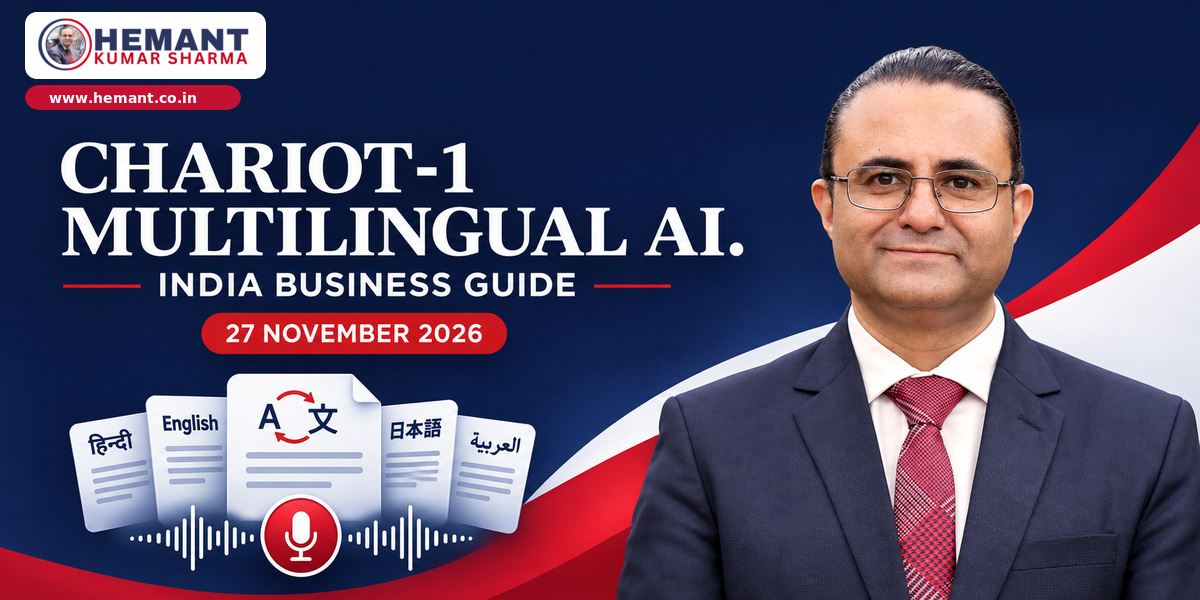
26 November 2026 ko Ministry of Electronics and Information Technology ne IndiaAI Mission-supported Chariot-1 foundation model suite launch ki. Official announcement ke mutabik suite mein India mein scratch se pre-trained large language model aur multilingual text-to-speech model shamil hain. Yeh development Indian businesses, consultants aur product teams ke liye noteworthy hai, lekin launch ko automatically production readiness samajhna galat hoga. Public announcement model sizes aur developer-reported research results deta hai; broad independent benchmarking, clear LLM access terms aur enterprise deployment evidence abhi establish nahi hue.
Confirmed Facts: Chariot-1 Mein Kya Launch Hua
Three model sizes, one Indian research programme
PIB ke mutabik Chariot-1 LLM 11-billion-parameter mixture-of-experts architecture use karta hai, jisme per token four billion parameters active hote hain. Model family ke three sizes announced hue: 10.7 billion, 1.7 billion aur 745 million parameters. Objective different deployment environments—data centres se laptops, smartphones aur edge devices—ke liye options banana hai.
Chariot Artificial Intelligence un first four teams mein hai jise IndiaAI Mission ne sovereign foundation models develop karne ke liye select kiya. Launch and research showcase Bharat Mandapam, New Delhi mein 26 November ko hua.
Text-to-speech: English plus ten Indian languages
Government announcement Chariot-1 TTS ke liye English ke saath Hindi, Bengali, Marathi, Tamil, Telugu, Kannada, Malayalam, Gujarati, Punjabi aur Odia list karta hai. Model context ke basis par numbers, dates, currencies, units, URLs aur abbreviations ko verbalise karne ke liye designed hai—real customer journeys mein yahi details voice experience ko useful ya confusing banati hain.
IndicShift, Nested Training aur Mixture of Vocabularies
IndicShift Indian scripts ke liye shared alphabet approach propose karta hai: official release 1,012 characters across 12 scripts ko 350 letters ke through represent karne aur Indian text par up to 2.5 times fewer tokens ka reported result deta hai. Same release 5%–8% Indian-language performance improvement on the same compute report karta hai while English and code performance maintained.
Nested Training ek training run aur shared weights se three complete model sizes train karne ka approach hai. Developer-reported comparison mein separate training ke against 62% speed improvement stated hai. Mixture of Vocabularies vocabulary ko 11 groups mein divide karke relevant group score karta hai; release 5.7-times fewer vocabulary entries scored per word aur same GPUs par 38% faster training report karta hai.
Important Boundary: Reported Benchmark Outcome Nahi Hota
Token reduction, training-speed improvement aur speech-accuracy figures official government release mein published hain, lekin underlying tests Chariot team ke reported results hain. Independent researchers ne publication date tak in claims ko broadly reproduce kiya ho, aisa public evidence establish nahi hua. A buyer ko model card, evaluation set, language-wise scores, safety tests, latency, pricing, data handling and access terms review karne chahiye.
PIB ne IndicShift ko open-source innovation kaha, but complete public repository, downloadable LLM weights, production API availability, enterprise SLA and commercial licence details announcement mein specify nahi kiye. Chariot’s existing platform terms services and APIs ko cover karte hain, lekin exact Chariot-1 LLM deployment route ko contract-stage evidence ke bina assume nahi karna chahiye.
Indian Businesses Ke Liye Real Opportunities
Regional content and campaign localisation
Marketing team Chariot-1 ko translation shortcut ke roop mein nahi, first-draft and variation engine ke roop mein evaluate kar sakti hai. Hindi, Bengali, Tamil ya Marathi campaign copy ko native reviewer ke saath test karein. Brand terms, price, offer validity, legal disclaimer aur CTA ko glossary-lock karein. Code-mixed Hinglish or Romanised regional language separate test category ho.
Voice assistance and outbound information
TTS utility call-centre prompts, appointment reminders, order status, educational modules, product explainers and accessibility journeys mein ho sakti hai. Voice clone ya personalised voice use karte waqt consent, usage scope, withdrawal and impersonation controls mandatory hain. Health, finance and legal advice ko unsupervised synthetic voice se deliver karna high-risk hai.
Edge and low-connectivity deployments
Smaller model sizes ka business promise local or constrained devices par inference hai. Lekin parameter count alone smartphone readiness prove nahi karta. Quantisation, memory footprint, supported hardware, battery impact, latency and offline accuracy test karni hogi. Edge deployment useful tab hai jab privacy, latency ya connectivity genuinely requirement ho—not merely innovation theatre.
Indian names, addresses and transaction language
Customer systems mein common failures person names, locality names, PIN codes, mixed-script addresses, rupee amounts, dates and abbreviations ke around hote hain. Chariot’s context-aware verbalisation claim ko exactly in high-value edge cases par test karein. Correct generic pronunciation se zyada important correct customer-specific information hai.
A Safe 50-Task Evaluation Framework
Language coverage
Har selected language ke liye at least five real tasks use karein: ad copy, product description, FAQ answer, address handling and voice rendering. Native reviewer naturalness, meaning preservation, grammar, cultural appropriateness and action accuracy score kare.
Business-critical facts
Dates, time, ₹ amounts, discount percentage, GST terms, phone numbers, website URLs and eligibility criteria ko deliberate stress test dein. One wrong digit beautiful language se zyada damaging hai. Text and audio output dono compare karein.
Consistency and recovery
Same instruction ko paraphrase karke five times run karein. Model uncertain ho to kya clarification maangta hai? Wrong response ke baad correction retain karta hai? Unsupported fact create karta hai? Repeated-run variance procurement decision ka part honi chahiye.
Cost and latency
Per-task cost sirf API price nahi: reviewer time, retries, engineering, hosting, monitoring and incident response include karein. Regional-language campaign mein lower token count tab valuable hai jab end-to-end correction cost and delivery time improve ho.
30-Day Pilot Roadmap
Week 1: Use case and data boundary
One low-risk workflow choose karein—regional FAQ draft ya non-sensitive TTS explainer. Customer personal data, confidential files and regulated decisions exclude karein. Success metrics and human owner document karein.
Week 2: Golden test set
50 representative tasks, approved answers, pronunciation guide and brand glossary banaiye. Competitor model ke same tasks run karein. Reviewer blind scoring use karein where possible.
Week 3: Controlled integration
Sandbox API or platform access mein logging, rate limits, access control and deletion workflow verify karein. Output auto-publish na ho. Every public asset native reviewer and brand approver se pass ho.
Week 4: Go, revise or stop
Accuracy, repeatability, latency, cost, privacy and reviewer effort compare karein. Clear threshold meet ho to narrow rollout; borderline ho to prompt/data refinement; critical failure ho to stop. Sovereign or Indian origin useful consideration hai, but production selection evidence-based rehni chahiye.
Governance Questions Before Procurement
Ask for model card, language-wise benchmark methodology, training-data governance, retention policy, incident notification, uptime support, regional hosting, subprocessors, voice-consent controls, IP terms, output-use rights and exit portability. “IndiaAI-supported” ko security certification, legal compliance or performance guarantee na samjhein.
Confirmed Facts vs Analysis
Confirmed: MeitY/PIB ne 26 November 2026 ko Chariot-1 LLM and TTS suite launch report ki; three LLM sizes and English plus ten Indian TTS languages listed hain; IndicShift, Nested Training and Mixture of Vocabularies ke performance figures developer-reported research results ke roop mein official release mein published hain.
Analysis: Business use cases, 50-task evaluation, procurement questions and 30-day pilot roadmap practical recommendations hain. Independent performance, India-wide production availability, public model weights, API SLA, pricing and customer outcomes ko announcement se infer nahi kiya gaya.
Conclusion
Chariot-1 Indian multilingual AI ecosystem ke liye meaningful signal hai—especially script efficiency, multiple model sizes and context-aware speech ki direction mein. Lekin serious adoption launch headline se nahi, task-level evidence se decide hoga. Indian businesses ko excitement aur discipline dono chahiye: narrow pilot, native-language review, hard factual tests, transparent costs and clear governance.
Regional-language marketing execution ke liye hamari digital marketing agency services explore karein. Multilingual model evaluation, native-language review aur pilot planning ke liye AI marketing consultation book karein.
Sources
Press Information Bureau / MeitY, published and event held 26 November 2026: https://www.pib.gov.in/PressReleasePage.aspx?PRID=2341725&lang=1®=3
Chariot Terms of Use, effective 10 June 2026: https://chariot.in/legal/terms/
Chariot product news, 12 November 2026: https://chariot.in/news/introducing-chariot-1-tts-multilingual/