
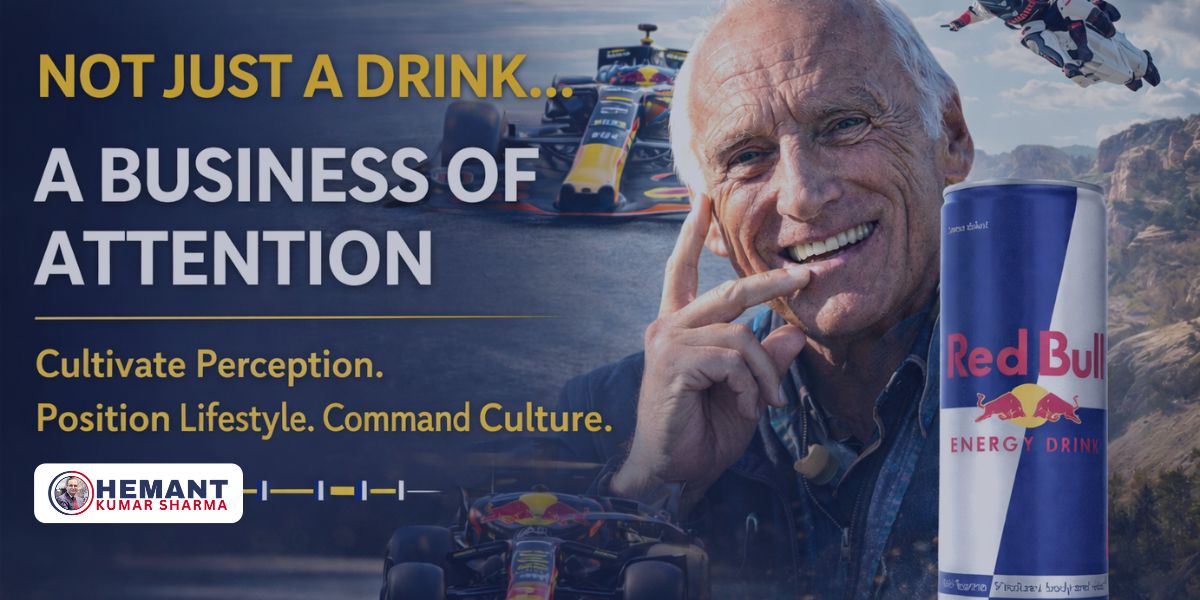
Aaj India mein hazaaron businesses marketing kar rahe hain. Koi Meta Ads chala raha hai, koi Google Ads, koi Instagram Reels bana raha hai, koi influencer ko hire kar raha hai. Phir bhi sach yeh hai ki bahut saare businesses ko woh result nahi milte jinki unhe umeed hoti hai.
Reason kya hai?
Reason simple hai.
Zyadaatar businesses product promote karte hain.
Bade brands perception build karte hain.
Isi difference ko samajhne ke liye Red Bull ek bahut powerful example hai. Red Bull ne market mein entry sirf ek drink ke roop mein nahi li. Usne apne aap ko ek functional beverage se upar utha kar energy, performance, thrill, speed, youth culture aur spectacle ke saath jod diya. Dietrich Mateschitz ne Thailand mein Krating Daeng naam ki drink se idea liya, Chaleo Yoovidhya ke saath milkar 1984 mein Red Bull co-found kiya, aur 1987 mein Austria mein launch kiya. Aaj Red Bull kehta hai ki usne 2025 mein 13.969 billion cans sell kiye.
Yeh sirf ek beverage success story nahi hai.
Yeh positioning, category creation, attention economics aur brand psychology ki kahani hai.
Aur isi wajah se is blog ka main point bhi simple hai:
Red Bull ne sirf drink nahi bechi. Usne ek aisa brand world create kiya jahan log product kharidne se pehle brand ko feel karne lage.
Indian businesses ke liye ismein bahut gehri seekh chhupi hui hai.
Clear Strategy. Better Visibility. Stronger Business Growth.
Work with Hemant Kumar Sharma for practical digital marketing consulting, mentoring, training and result-oriented execution support across SEO, paid ads, social media, branding and online growth systems.
Red Bull ki asli kahani sirf beverage ki kahani nahi hai
Internet par Red Bull ke founder ke baare mein kai dramatic stories chalti rehti hain. Kuchh facts theek hote hain, kuchh overly simplified hote hain, aur kuchh pure viral storytelling ke liye polish kar diye jaate hain. Lekin jo solid baat hai, woh yeh hai ki Dietrich Mateschitz ek marketing background se aaye, Thailand trip ke dauraan unhone ek local energy tonic dekha, aur us concept ko global market ke liye adapt kiya. 1984 mein company co-found hui aur 1987 mein Austria mein launch hua.
Ab yahan dhyaan dene wali baat yeh hai ki Red Bull ne apni entry kisi normal cola ya soft drink brand ki tarah nahi ki. Usne taste war mein ghusne ki jagah ek nayi identity build ki. Usne yeh nahi kaha ki “hamara drink zyada tasty hai.” Usne kahani hi badal di. Usne product ko refreshment se jod kar market nahi kiya. Usne usse energy, wakefulness, stamina, performance aur edge ke saath position kiya.
Aur marketing mein kai baar sabse bada fayda wahi brand uthata hai jo category ke rules follow karne ke bajay category ki language hi बदल deta hai.
Isi liye Red Bull ko samajhna important hai. Yeh humein batata hai ki growth ka raasta har baar mass appeal se nahi nikalta. Kai baar growth ka raasta sharp identity se nikalta hai.
Most businesses product bechte hain, Red Bull ne meaning becha
Yahi sabse bada difference hai.
Ek aam business bolta hai:
- hum quality dete hain
- hum affordable hain
- hum trusted hain
- hum best service dete hain
Problem yeh hai ki market mein har teesra business yahi bol raha hota hai.
Red Bull ne is trap mein ghusne ki jagah ek aur raasta liya. Usne apne aas-paas ek aisa symbolic universe create kiya jahan product sirf product nahi raha. Woh ek signal ban gaya. Ek lifestyle cue ban gaya. Ek brand code ban gaya.
Aap sochiye, jab kisi brand ko speed, extreme sports, motorsports, stunts, adventure aur youth energy ke saath repeatedly joda jaata hai, toh audience ke mind mein product ka actual formula ya ingredient list pehle yaad nahi aati. Unhe brand ka emotion yaad aata hai.
Yahi marketing ka asli game hai.
Log features ko compare karte hain.
Lekin decisions aksar perception ke basis par lete hain.
Indian market mein bhi yahi hota hai. Do coaching brands same syllabus bech rahe hote hain, do clinics similar services de rahe hote hain, do real estate consultants same type ki properties dikha rahe hote hain, do digital marketing agencies same platforms par kaam kar rahi hoti hain. Lekin jo brand zyada clear, premium aur memorable perception build karta hai, uske paas audience khud attract hone lagti hai.
Lesson:
Aapka product kya karta hai, yeh important hai.
Lekin aapka brand kis cheez ka pratinidhitva karta hai, yeh usse bhi zyada important hai.
Positioning beats explanation every single time
Aaj bahut saare founders aur business owners ek common galti karte hain. Woh sochte hain ki market ko bas thoda aur samjha diya jaaye, thoda aur content daal diya jaaye, thoda aur detail de di jaaye, toh sales badh jayengi.
Nahi.
Har baar nahi.
Market ko har product ki detail yaad nahi rehti. Market ko position yaad rehta hai.
Red Bull ne apne aap ko cola ki tarah explain nahi kiya. Usne energy segment mein apni jagah banayi. Yehi category creation ka seed tha. Brand ne audience ko ek naya consumption context diya: late night work, fatigue, travel, sports, performance, edge, alertness. Is tarah se Red Bull ne sirf shelf par jagah nahi maangi, usne customer ke routine aur imagination mein jagah maangi.
Agar aap apne business ko India mein grow karna chahte hain, toh yeh sawal poochhiye:
Main kis category mein compete kar raha hoon?
Aur usse bhi bada sawal:
Main kis mental category ko own kar sakta hoon?
For example:
- aap sirf “digital marketing agency” nahi ho sakte
- aap “high-trust growth consultant for serious business owners” ho sakte ho
- aap sirf “website designer” nahi ho
- aap “premium digital storefront architect” ban sakte ho
- aap sirf “nutrition brand” nahi ho
- aap “performance-led lifestyle brand” ban sakte ho
Brand tab powerful hota hai jab woh apni market category ko describe nahi karta, balki redefine karta hai.
Premium pricing sirf margin ka game nahi hota, perception ka bhi hota hai
Red Bull ki story ka ek important angle premium pricing bhi hai. Viral posts exact ratios ko sensational bana dete hain, lekin broad truth yeh hai ki Red Bull ne apne aap ko cheap mass drink ki tarah position nahi kiya. Usne premium signaling use ki. Premium perception ne uski desirability ko aur strong kiya.
Bahut saare Indian businesses yahan galti kar dete hain.
Woh market mein enter hote hi kehte hain:
“Hum sabse sasta denge.”
“Hum competitor se kam charge karenge.”
“Hum discount de kar market pakdenge.”
Shuru mein yeh attractive lag sakta hai. Lekin long term mein yeh brand ko weak bhi bana sakta hai. Jab aapki pehli pehchaan price ban jaati hai, toh aapki value ko log kam samajhne lagte hain. Phir aapko hamesha ya toh offer dena padta hai, ya price defend karna padta hai.
Premium pricing ka matlab har business ke liye high price nahi hota. Iska matlab hota hai intentional pricing.
Aisi pricing jo brand message ko support kare.
Red Bull ka can, size, distribution, branding aur communication sab milkar ek cheez bolte the:
“This is not just another drink.”
Aap bhi apne business mein yeh dekh sakte hain:
- kya aapki pricing aapki positioning ke saath align hai?
- kya aapka service delivery model premium experience deta hai?
- kya aapka communication trust aur seriousness show karta hai?
- kya aap bargain market ko attract karna chahte hain ya value-seeking audience ko?
Price ek number nahi hota.
Price bhi brand language ka hissa hota hai.
Red Bull ka asli asset factory nahi, attention tha
Yehi point sabse powerful hai.
Red Bull ko kai marketers ek “media company that sells a drink” ke roop mein describe karte hain. Strict legal definition ke roop mein nahi, par strategic sense mein yeh line kaafi theek baithti hai. Brand ne traditional FMCG thinking se bahar nikal kar attention-led ecosystem build kiya. Sports sponsorships, events, athlete partnerships, media properties, video storytelling aur visual spectacle ne milkar Red Bull ko ek cultural machine bana diya.
Yahan se Indian brands ko bahut bada lesson milta hai.
Aaj bhi India mein bahut businesses marketing ko sirf teen cheezon mein samajhte hain:
- posts
- ads
- leads
Lekin strong brands in teen cheezon ke pehle ek aur cheez banate hain:
Attention architecture
Yani aap market mein kis form mein dikhoge?
Kis context mein yaad kiye jaoge?
Kis type ki imagery, experience, tone aur story se जुड़े रहोगे?
Aapka brand kis tribe ka hissa lagega?
Red Bull ne TV ad run karke hi apna kaam nahi kiya. Usne event ko content banaya, content ko identity banaya, identity ko aspiration banaya, aur aspiration ko product demand mein badal diya.
Aaj ke digital era mein yeh aur bhi relevant hai.
Agar aapka business sirf ads se leads laane ki soch raha hai, toh aap short-term game khel rahe ho.
Agar aap attention aur trust build kar rahe ho, toh aap compounding game khel rahe ho.
Culture own karna, shelf own karne se bada hota hai
Red Bull ne sirf retail shelf par jagah nahi li. Usne culture mein jagah li.
Extreme sports, stunts, Formula 1, athlete stories, challenge, grit, risk-taking — yeh sab Red Bull ke brand DNA ka part ban gaye. 2004 mein Red Bull ne Jaguar Racing Formula 1 team acquire ki, jise kai reputed reports symbolic $1 purchase ke roop mein refer karti hain. Yeh move brand expansion ka ek bold example tha.
Ab sochiye, kitna bada shift hai:
Ek beverage brand sirf drink bech kar nahi rukta.
Woh sport, media, competition aur spectacle ke ecosystem mein ghus jaata hai.
Yahi wajah hai ki Red Bull ko dekh kar log sirf ek can imagine nahi karte. Woh ek poori duniya imagine karte hain.
Indian business owners ke liye iska matlab kya hai?
Iska matlab yeh nahi ki har business ko F1 team kharidni hai. Bilkul nahi.
Iska matlab yeh hai ki har business ko yeh samajhna hai ki:
- uska natural culture space kya hai
- uski audience kis ecosystem mein time spend karti hai
- brand ko kis context mein associate kiya ja sakta hai
- kaunsi communities, themes, events ya thought spaces uske liye fit hain
For example:
- ek premium fitness brand sirf supplement ads na chalaye, local athletic communities build kare
- ek consultant sirf services list na kare, thought leadership aur frameworks own kare
- ek law firm sirf legal posts na daale, trust-led public education kare
- ek doctor sirf clinic offers na chalaye, patient confidence aur authority-based education build kare
Jab brand culture mein ghusta hai, tab growth zyada organic aur sustainable ho jaati hai.
Attention-led branding Indian businesses ke liye kyon important hai
India mein competition bahut zyada hai. Product duplication easy hai. Service imitation aur bhi easy hai. Aaj koi bhi thoda budget laga kar website bana sakta hai, ad chala sakta hai, social media profile create kar sakta hai.
Toh edge kahan se aayega?
Edge aayega:
- clearer positioning se
- stronger narrative se
- premium perception se
- repeated consistency se
- audience psychology ki better understanding se
- aur sabse important, trustworthy visibility se
Yahi woh jagah hai jahan bahut businesses fail hote hain. Woh marketing ko activity samajhte hain, architecture nahi.
Red Bull ka lesson yeh nahi hai ki har brand ko extreme sports sponsor karne chahiye. Lesson yeh hai ki har brand ko yeh samajhna chahiye ki attention random nahi hoti, design ki ja sakti hai.
Agar aap India mein MSME, professional service provider, consultant, coach, healthcare practice, real estate advisor, educator, D2C founder ya local business owner hain, toh aap apne brand ke liye yeh kaam kar sakte hain:
- apni category language define kariye
- apni premium cues identify kariye
- apni brand visuals consistent rakhiye
- apna content sirf informative nahi, interpretive banaiye
- apna message har platform par same soul ke saath repeat kariye
- apne audience ke liye ek recognizable brand world build kariye
Marketing tab mature hoti hai jab brand ko dekhkar audience ke mind mein turant ek clear image ban jaaye.
Revenue se pehle machine ko samajhiye
Red Bull ke current numbers impressive hain. Company ke official figures ke mutabik usne 2025 mein 13.969 billion cans sell kiye. Mark Mateschitz ki estimated net worth 2026 mein around $45.8 billion ke aas-paas report hui.
Lekin business owners ko in numbers par sirf surprise nahi hona chahiye. Unhe yeh dekhna chahiye ki numbers ke peeche machine kya thi.
Machine kya thi?
- distinct positioning
- premium value signaling
- strong symbolic branding
- media-led attention
- category ownership
- culture partnerships
- consistency over time
Yahi actual wealth machine hoti hai.
Bahut businesses sirf revenue dekhte hain aur kehte hain:
“Unhone itna kama liya, hum kaise kama sakte hain?”
Lekin sahi sawal yeh hona chahiye:
Unhone kaunsa perception engine build kiya jisse earning natural outcome ban gayi?
Jab tak aap machine ko nahi samjhenge, aap result ko copy nahi kar paayenge.
Indian businesses ke liye direct practical lessons
Chaliye ab is poori story ko practical language mein samjhte hain.
Lesson 1 — Product ko sirf product mat rakhiye
Aapka offering kis emotion, result ya identity se judi hui hai, yeh define kijiye.
Lesson 2 — Cheap dikhna band kijiye
Har market mein low price se sale mil sakti hai, lekin high trust se brand banta hai.
Lesson 3 — Ads se pehle positioning clear kijiye
Varna aap paid traffic laakar bhi confused market ko confused hi chhod denge.
Lesson 4 — Content ko sirf information mat banaiye
Content ko brand signal banaiye.
Lesson 5 — Audience ko lead mat samajhiye
Audience ko tribe samajhiye.
Lesson 6 — Repetition se ghabraiye mat
Strong brands boring nahi hote. Strong brands consistent hote hain.
Lesson 7 — Growth ko promotion tak limit mat kijiye
Growth ka ek pillar visibility hai, doosra perception, teesra trust, chautha experience.
Yahi compounding ka model hai.
Final Thought
Red Bull ki sabse badi marketing genius yeh nahi thi ki usne ek drink launch ki.
Uski sabse badi genius yeh thi ki usne ek brand universe create kiya.
Aur aaj ke digital era mein yeh lesson aur bhi zyada valuable hai.
Aap chahe consultant ho, doctor ho, lawyer ho, trainer ho, coach ho, manufacturer ho, D2C founder ho, ya local business owner — market ab sirf un logon ko reward nahi karta jo available hain. Market unko reward karta hai jo memorable, meaningful aur trusted hain.
Isliye apne business se ek naya sawal poochhiye:
Kya main sirf apna product bech raha hoon, ya main apne brand ke aas-paas ek aisi duniya bana raha hoon jahan sahi log khud attract hone lagen?
Yahi Red Bull ka asli lesson hai.
Aur yahi modern branding ka bhi.
FAQs
1. Red Bull marketing strategy itni famous kyon mani jaati hai?
Kyuki Red Bull ne traditional beverage marketing se alag jaakar apne brand ko energy, adventure, sports aur media attention ke saath joda. Usne sirf drink promote nahi kiya, ek strong identity build ki.
2. Kya Red Bull sach mein ek media company hai?
Legal sense mein Red Bull ek beverage company hai, lekin marketing world mein ise aksar media-driven brand model ke example ke roop mein dekha jaata hai kyunki isne events, sports, athlete storytelling aur content ecosystem par bahut focus kiya.
3. Indian businesses Red Bull se kya seekh sakte hain?
Sabse bada lesson hai ki product se pehle positioning clear honi chahiye. Strong branding, premium perception, consistent message aur audience psychology ko samajhna long-term growth ke liye essential hai.
4. Kya premium pricing har business ke liye sahi hoti hai?
Har business ke liye high pricing zaroori nahi, lekin intentional pricing zaroori hai. Price aapke brand signal ka part hota hai. Agar aap premium trust build karna chahte hain, toh pricing aur experience align hone chahiye.
5. Kya sirf ads chala kar Red Bull jaisi growth mil sakti hai?
Nahi. Ads sirf ek channel hote hain. Red Bull ka strength uska broader attention ecosystem tha — culture, sports, content, perception aur identity ka combination.
6. Kya small businesses bhi attention-led branding kar sakte hain?
Bilkul. Har small business apni niche audience ke liye recognizable brand language, consistent visuals, trust-building content aur clear positioning create kar sakta hai.
7. Red Bull ki story ka sabse practical takeaway kya hai?
Yahi ki marketing sirf promotion nahi hoti. Marketing ka real kaam hota hai demand ke pehle perception banana.
Agar aapka business bhi abhi tak random posting, scattered advertising, ya sirf sales-driven messaging par chal raha hai, toh ho sakta hai aap growth ke asli lever ko miss kar rahe hon. Strong digital growth tab aati hai jab brand positioning, audience understanding, trust signals, visibility strategy aur long-term perception ek saath kaam karte hain. Agar aap apne business ke liye clearer brand direction, digital marketing strategy, ya authority-led growth model build karna chahte hain, toh Hemant Kumar Sharma ke saath strategic consultation explore kar sakte hain.