
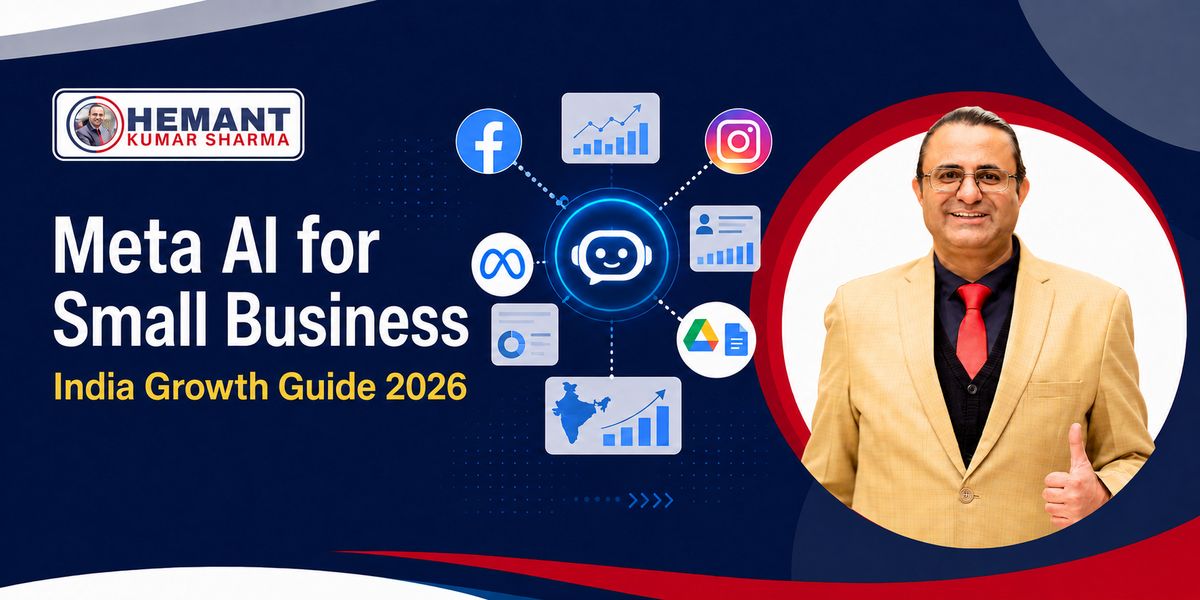
Small businesses ke liye AI ka most useful version sirf captions likhne wala tool nahi hai. Real value tab aati hai jab AI actual business signals—content performance, advertising data, documents aur recurring workflows—ko samajh kar actionable first draft de.
Meta ne 19 August 2026 ko small businesses ke liye new Meta AI capabilities announce ki. Assistant Facebook aur Instagram metrics, Meta Ads aur Google Workspace ke saath kaam kar sakta hai. Yeh development reporting, campaign review aur content planning ko faster bana sakta hai. Lekin connected data ke saath convenience ke barabar governance bhi important hai.
Indian SMEs, consultants, creators aur agencies ko isse autonomous marketing manager nahi, controlled analyst-cum-production assistant samajhna chahiye. Yeh guide confirmed facts aur practical analysis ko clearly separate karta hai, India availability assume nahi karta, aur 30-day adoption framework deta hai.
What Meta officially announced on 19 August 2026
Confirmed facts
Meta ke official announcement ke mutabik, company ne small businesses ke liye Meta AI features introduce karna shuru kiya hai. Assistant Facebook aur Instagram performance metrics, Meta Ads aur Google Workspace se information use karke insights nikal sakta hai.
Meta ke examples mein campaign audit aur optimisation support, similar businesses ke saath comparison, aur yeh identify karna shamil hai ki kya work kar raha hai aur kya improve ho sakta hai. Connected information ko presentations, documents aur spreadsheets mein convert kiya ja sakta hai. Recurring tasks aur reminders performance updates mein help kar sakte hain.
Meta ne ek Mac app bhi announce ki. Axios aur The Verge ki 19 August reporting ke mutabik business aur creator capabilities Meta AI ke web aur mobile experiences mein bhi available karai ja rahi hain.
Important availability caveat
Official language “starting to introduce” hai. Cited announcement ne India ke liye universal availability date, full eligibility list ya every-feature rollout timeline publish nahi ki. Kisi overseas screenshot ko India-wide access mat samjhiye. Apne account interface, connector permission screen aur official help information ko source of truth rakhiye.
What this changes for a small marketing team
Analysis
Many marketing teams ka reporting flow fragmented hai: Instagram Insights se numbers copy karo, Ads Manager export nikalo, Sheet update karo aur presentation banao. New integration ka promise hai ki ek assistant in signals ko summarize karke structured first draft de.
Lekin first draft final decision nahi hota. AI incomplete attribution overlook kar sakta hai, correlation ko cause samajh sakta hai, ya vanity metrics ko business outcomes se zyada importance de sakta hai. Human reviewer ko source data, lead quality, seasonality aur business context check karna hi hoga.
Five high-value use cases for Indian businesses
1. Weekly social performance review
Meta AI se puchhiye ki pichhle four weeks mein kaunse formats ne reach ke saath saves, shares, profile actions aur meaningful comments drive kiye. Output ko website visits, WhatsApp enquiries aur qualified leads ke against verify kijiye.
Useful prompt:
“Last 28 days ke Instagram aur Facebook posts ko format, topic aur CTA ke basis par group karo. Reach ke saath saves, shares aur profile actions dikhao. Low sample size flag karo, assumptions list karo, phir three testable recommendations do.”
2. Campaign audit before optimisation
Assistant campaign structure, spend distribution, creative fatigue signals aur obvious tracking gaps ka first-pass review kar sakta hai. Bid, budget, audience ya creative changes directly apply karne ke bajay recommendations ko approval checklist mein convert kijiye.
Consultants ke liye yeh multi-campaign review fast bana sakta hai. Final judgement Ads Manager data, attribution window, CRM lead status aur actual sales ke context mein hona chahiye.
3. Management-ready reports
Connected metrics ko weekly document, spreadsheet ya deck mein organise karna relatively low-risk use case hai—provided template fixed ho. Report mein spend, results, cost per result, qualified leads, revenue evidence, key changes, risks aur next actions separate rakhiye.
“Performance improved” jaise vague statements reject karein. Baseline, comparison period, currency, timezone aur metric definition mandatory honi chahiye.
4. Evidence-led content planning
Generic “30 post ideas” ke bajay actual account patterns analyse karwayein. Top-performing theme ko blindly repeat nahi karna; audience overlap, creative fatigue aur business priority bhi matter karte hain.
For example, a Delhi consultant ke educational carousels saves la sakte hain while founder videos enquiries generate karein. Dono ka funnel role different hai. AI ko ideas ko awareness, consideration, lead generation aur retention ke tags dene ko boliye.
5. Recurring monitoring and reminders
Weekly summaries useful hain, but exception-based reporting aur valuable ho sakti hai: spend rise ho raha ho without qualified leads, campaign delivery suddenly fall ho, ya frequency climb kare while response weaken ho. Meta ne recurring tasks mention kiye hain; exact alerts and availability account aur rollout par depend kar sakte hain.
India-specific implications
Lean teams can reduce reporting overhead
Indian SMEs mein owner, marketer aur salesperson often same data ko different formats mein dekhte hain. Automated first drafts manual copying reduce kar sakte hain. Saved time ko landing-page fixes, lead follow-up aur creative testing mein invest kijiye.
WhatsApp and offline conversions need context
Many Indian businesses leads ko phone, WhatsApp ya in-person close karte hain. Platform metrics alone revenue truth nahi batate. If AI sees form leads but not lead quality, optimisation advice directionally wrong ho sakti hai. CRM status, call outcomes aur actual sales ko review mein include karein—even if separately.
Multilingual content needs human nuance
Hindi, Hinglish aur regional-language content analyse karte waqt translation, local context aur offer clarity matter karte hain. Generated wording ko native reviewer approve kare. Formal Hindi har audience ke liye natural nahi hoti; unnecessary English bhi trust reduce kar sakti hai.
Agencies need client-by-client boundaries
Connected Workspace aur ad accounts ke beech strict separation maintain karein. Client A ka data Client B ke prompt, deck ya template mein nahi aana chahiye. Separate contexts, least-privilege access aur named owners use karein.
Privacy and data governance: connect carefully
Confirmed facts
Meta’s Privacy Center ke mutabik Meta AI interactions generative AI models ko develop aur improve karne ke liye use ho sakti hain. Meta ke privacy materials yeh bhi explain karte hain ki AI chats messages, responses aur saved details retain kar sakti hain, aur information applicable policies aur settings ke under experiences aur ads personalise karne mein use ho sakti hai.
Analysis and recommendation
Iska matlab automatically yeh nahi ki every connected business file public ho jayegi. Lekin Google Workspace ya sensitive source connect karne se pehle exact permissions, applicable terms aur account controls read karna zaroori hai.
Customer KYC, health records, payment information, passwords, unpublished financials, legal strategy, employee files ya confidential client material reporting convenience ke liye expose na karein. India mein DPDP-minded check lagaiye: purpose kya hai, minimum data kitna chahiye, access kiske paas hai, retention expectation kya hai, aur task aggregated ya de-identified data se ho sakta hai kya?
A practical 30-day adoption plan
Week 1: Map data and permissions
Meta pages, Instagram accounts, ad accounts aur Workspace sources list karein. Each source ka owner name karein. Dormant users remove karein, unnecessary admin access reduce karein, aur prohibited data classes define karein.
Week 2: Start with read-and-summarise work
One low-risk account aur fixed date range use karein. Weekly summary banwayein, then every number source dashboard se compare karein. Errors, missing context aur misleading recommendations log karein.
Week 3: Standardise prompts and reports
Approved prompt templates banayein. AI se date range, data source, assumptions, limitations aur confidence mention karwayein. Consistent report format week-to-week comparison ko meaningful rakhega.
Week 4: Add controlled recurrence
Verification ke baad hi recurring summary ya reminder add karein. Named human reviewer accountable rahe. Budget, targeting, creative ya document-sharing change without explicit approval na ho.
Human approval checklist
Before accepting a recommendation, verify:
• Correct account, campaign and reporting period
• Currency, timezone and attribution window
• Spend, conversions and cost calculations
• Lead quality or revenue evidence outside Meta
• Sample size and seasonal effects
• Brand, legal and platform-policy compliance
• No confidential data in the output
• Named person responsible for final action
What not to do
Entire company Drive day one par connect na karein. “Similar businesses” benchmark ko guaranteed market truth mat samjhiye without knowing comparison basis. One unusual week ke baad strategy rewrite mat karein. Generated deck source verification ke bina client ko present na karein. Mac app ya every connector ko every Indian account ke liye available assume na karein.
Confirmed facts versus informed analysis
Confirmed:
• Meta published the small-business feature announcement on 19 August 2026.
• Meta AI is being introduced with Facebook/Instagram metrics, Meta Ads and Google Workspace integrations.
• It can assist with insights, audits, comparisons, documents, spreadsheets, presentations and recurring updates.
• A Mac app was announced; business capabilities were also reported for web and mobile.
• Meta’s privacy materials say AI interactions may be used to improve models and personalise experiences under its policies.
Analysis:
• Immediate value for Indian SMEs is likely reporting, diagnosis and content planning—not autonomous campaign management.
• WhatsApp, phone and offline sales need external lead-quality context.
• Agencies should use least-privilege access, separate client contexts and mandatory human approval.
• Controlled pilots will produce better decisions than company-wide connection for convenience.
Conclusion
Meta AI ka new business layer meaningful shift hai: generic content generator se connected marketing analyst ki direction. Indian SMEs aur consultants ke liye opportunity real hai—faster reporting, better first-pass audits aur evidence-led content planning.
Value tab sustainable hogi jab permissions limited hon, prompts structured hon, numbers verified hon aur decisions human-owned rahen. AI ko speed dijiye; accountability nahi.
Apne Meta Ads, social content, reporting aur AI workflow ko practical governance ke saath set up karna chahte hain? Hemant Kumar Sharma se digital marketing consultation ke liye visit karein: https://hemant.co.in
Call or WhatsApp: +91 98116 81687
Verification note: Claims were rechecked on 21 August 2026. Meta had not published an India-specific universal rollout date or complete eligibility matrix in the cited announcement.