
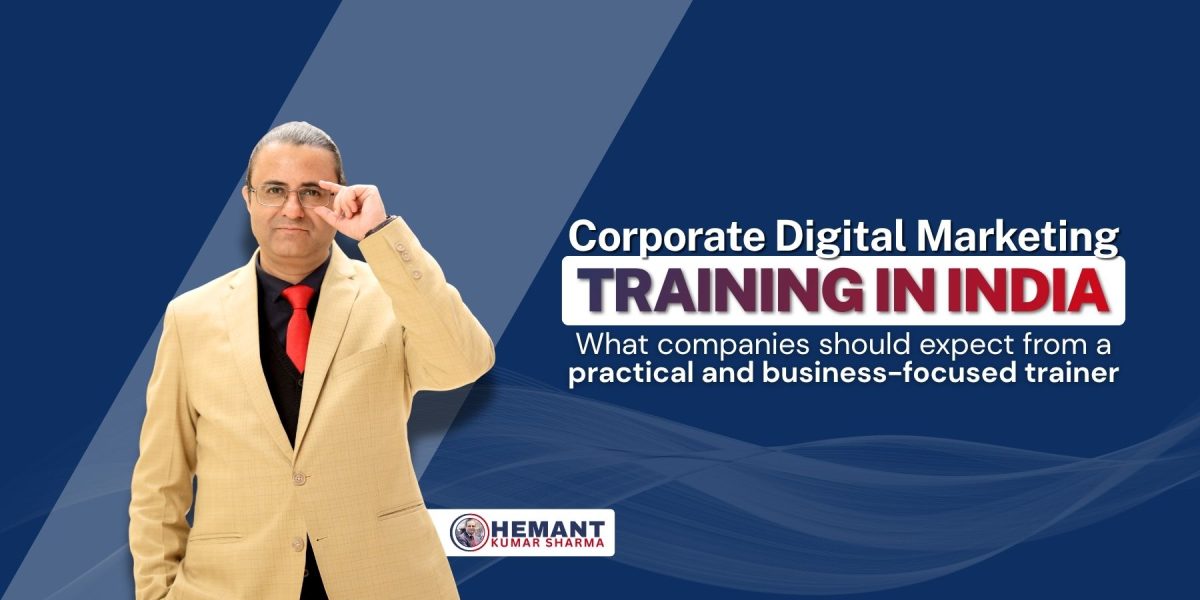
India mein digital marketing ab sirf marketing department ka subject nahi raha. Aaj digital ka impact sales, branding, customer service, HR, recruitment, leadership visibility, dealer support, franchise growth, local business discovery, and even employer branding tak pahunch chuka hai.
Pehle companies digital marketing ko mostly outsourcing ke angle se dekhti thi. Agency hire kar lo, creatives banwa lo, ads chalwa lo, SEO karwa lo, aur monthly reports le lo. Lekin ab situation badal chuki hai.
Aaj companies ko yeh samajh aa raha hai ki digital marketing sirf agency ka kaam nahi, organisation-wide understanding ka subject hai. Agar internal teams ko basic digital awareness nahi hogi, toh agency bhi limited output degi. Agar sales team ko lead source samajh nahi aayega, toh follow-up weak hoga. Agar HR team LinkedIn aur employer branding ka role nahi samjhegi, toh talent attraction weak rahega. Agar leadership ko digital metrics samajh nahi aayenge, toh marketing decisions sirf guesswork par chalenge.
Isi liye corporate digital marketing training India mein steadily important ho rahi hai.
Lekin yahan ek important sawal hai:
Corporate digital marketing training exactly kaisi honi chahiye?
Kya yeh ek generic seminar hona chahiye?
Kya trainer ko bas slides dikhani chahiye?
Kya employees ko SEO, Google Ads, Meta Ads, Canva, AI tools aur social media ke modules de dena enough hai?
Ya training ko company ke business model, team roles, customer journey, market reality aur execution challenges ke hisaab se design karna chahiye?
Mere view mein, corporate training ka real value tab aata hai jab woh practical, customised, role-aware, business-focused aur outcome-oriented ho.
Agar company training par paisa spend kar rahi hai, toh uska objective sirf “employees ne session attend kar liya” nahi hona chahiye. Objective hona chahiye ki employees better questions pooch sakein, better execution samajh sakein, better coordination karein, aur company ke digital goals ko more intelligently support karein.
Is article mein hum detail mein samjhenge ki companies ko ek practical digital marketing trainer for companies se kya expect karna chahiye, training ka structure kaisa hona chahiye, kis tarah ke topics cover hone chahiye, aur Indian business context mein iska future impact kya hoga.
Corporate Digital Marketing Training Ki Zarurat Kyu Badh Rahi Hai?
India mein businesses fast digital ho rahe hain. Customers search kar rahe hain, compare kar rahe hain, reviews dekh rahe hain, videos consume kar rahe hain, LinkedIn profiles check kar rahe hain, WhatsApp par enquire kar rahe hain, aur brands ko multiple touchpoints par judge kar rahe hain.
Digital media India ke ad market mein major force ban chuki hai, and industry reports indicate that digital advertising has grown strongly and is projected to continue expanding. इसका मतलब साफ है: companies digital par spend kar rahi hain, lekin spend ke saath understanding bhi zaruri hai.
Agar company ka internal team digital ko samajh hi nahi rahi, toh kuch problems naturally hoti hain:
- marketing team agency par over-dependent ho jaati hai
- sales team lead source ki quality samajh nahi paati
- management reports dekhkar right decision nahi le pata
- content approvals slow ya confused hote hain
- brand tone inconsistent ho jata hai
- employees LinkedIn par company ko support nahi karte
- campaigns aur business goals ke beech gap ban jata hai
- digital spend ka accountability weak ho jata hai
Corporate training in gaps ko reduce kar sakti hai.
Corporate Training Aur Normal Digital Marketing Course Mein Difference
Corporate digital marketing training ko regular classroom course ke saath confuse nahi karna chahiye.
Ek normal course usually structured hota hai beginners ke liye. Usmein SEO, social media, ads, email marketing, analytics, content, tools — sab broad level par cover hote hain.
Lekin corporate training ka context alag hota hai.
Company ke employees already kisi role mein kaam kar rahe hote hain. Unhe random syllabus nahi, role-based relevance chahiye.
For example:
- sales team ko lead handling aur digital enquiry behaviour samajhna chahiye
- marketing team ko content, ads, SEO, analytics aur campaign coordination samajhna chahiye
- HR team ko LinkedIn, employer branding aur recruitment visibility samajhni chahiye
- leadership ko digital metrics, budget allocation, agency review aur strategic direction samajhna chahiye
- customer service team ko reviews, WhatsApp communication aur online reputation ka role samajhna chahiye
Isliye digital marketing training for employees ko customised hona chahiye. Same content sabko dena practical nahi hota.
Practical Trainer Se Companies Ko Kya Expect Karna Chahiye?
Ab main point par aate hain. Agar aap company ke founder, HR head, training manager, marketing head, sales leader, or business owner hain, toh aapko trainer se kya expect karna chahiye?
1. Training Se Pehle Needs Analysis
Ek practical trainer bina samjhe training deliver nahi karta.
Training se pehle trainer ko yeh samajhna chahiye:
- company kis industry mein hai
- target audience kaun hai
- B2B hai ya B2C
- local, national, ya international market hai
- internal team ka current skill level kya hai
- company agency ke saath kaam kar rahi hai ya in-house
- training ka objective kya hai
- participants ka role kya hai
- current digital challenges kya hain
- leadership expectation kya hai
Yeh needs analysis training ko relevant banata hai.
Future Impact
Indian companies jo customised needs analysis ke saath training karwayengi, unhe generic workshops se zyada practical value milegi. Training ka future one-size-fits-all nahi, business-specific hoga.
2. Role-Based Training Design
Corporate training ka sabse bada rule hai: same training sab employees ke liye same impact nahi deti.
Ek sales executive ko Meta Ads dashboard deeply samjhana shayad necessary nahi, lekin usse yeh samajhna zaruri hai ki ad se aayi lead cold hai ya warm, follow-up ka timing kya hona chahiye, aur lead conversation ka tone kya ho.
Ek HR person ko SEO keyword research deeply nahi chahiye, lekin employer branding, LinkedIn presence, employee advocacy aur recruitment content ka role samajhna chahiye.
Ek marketing team member ko content planning, campaign coordination, reporting and analytics samajhna zaruri hai.
Future Impact
Role-based corporate digital marketing workshop India mein increasingly popular hogi, kyunki companies generic training se practical output expect nahi kar payengi.
3. Business Objective Alignment
Training ka objective “digital marketing sikhana” nahi hona chahiye. Objective hona chahiye digital marketing ko company ke business goals se align karna.
For example:
- agar company B2B hai, toh LinkedIn, SEO, content authority, email nurturing aur lead qualification important ho sakte hain
- agar company local service business hai, toh Google Business Profile, local SEO, reviews, WhatsApp and paid lead generation important ho sakte hain
- agar company D2C hai, toh performance marketing, creatives, retention, marketplace, social proof, and analytics important ho sakte hain
- agar company education ya training sector mein hai, toh trust, counselling funnel, content, webinars, and remarketing important ho sakte hain
Trainer ko business objective samajhna chahiye, tabhi training useful hogi.
Future Impact
Aage companies sirf theoretical trainers nahi, business-aware trainers prefer karengi. Training tabhi valuable hogi jab woh revenue, brand, leads, trust, retention ya efficiency se connected ho.
4. Practical Examples and Indian Case Thinking
Corporate participants ko generic global examples se limited value milti hai. Indian business examples zyada relatable hote hain.
Trainer ko examples dene chahiye:
- local business ke Google reviews ka impact
- B2B LinkedIn visibility ka role
- landing page vs website homepage difference
- WhatsApp lead follow-up mistakes
- service business content examples
- ad campaign ke expectation vs reality
- sales aur marketing team ke coordination gaps
- SEO timeline and patience
Indian teams tab zyada engage karti hain jab examples unke market ke close hote hain.
Future Impact
As AI-generated generic training content increases, real-world examples aur practical case thinking ki demand aur badhegi.
5. Digital Fundamentals Ko Strong Banana
Corporate training mein advanced tools se pehle fundamentals clear hone chahiye.
Employees ko samajhna chahiye:
- digital customer journey kya hoti hai
- audience intent kya hota hai
- branding aur lead generation mein difference kya hai
- search aur social ka role alag kaise hota hai
- content ka purpose kya hai
- website trust kaise build karti hai
- paid ads kab help karte hain
- analytics kya batati hai aur kya nahi batati
- online reputation ka business impact kya hai
Fundamentals weak honge toh tools training ka fayda limited rahega.
Future Impact
Companies mein digital maturity tabhi aayegi jab employees tools ke saath thinking bhi samjhenge. Future employees ko tactical skill ke saath business judgement bhi chahiye hoga.
6. Content, SEO, Ads and Analytics Ka Balanced Coverage
Corporate digital marketing training mein content ko ignore nahi karna chahiye. SEO ko sirf keywords tak limit nahi karna chahiye. Ads ko magic button nahi batana chahiye. Analytics ko sirf numbers ka dashboard nahi banana chahiye.
A practical trainer should cover:
Content
- brand messaging
- audience education
- trust building
- sales support content
- employee content contribution
- LinkedIn and social content
SEO
- search intent
- service pages
- local SEO
- useful content
- Google Business Profile
- blog strategy
Google’s guidance around helpful, reliable, people-first content makes this especially important because companies cannot rely only on thin, keyword-stuffed pages for long-term visibility.
Ads
- campaign objectives
- audience targeting
- creative testing
- landing pages
- lead quality
- remarketing
- budget logic
Analytics
- traffic
- leads
- engagement
- conversion
- cost per lead
- quality indicators
- reporting interpretation
Future Impact
Companies will need multi-channel literacy. Department silos will reduce when more employees understand how content, SEO, ads, website and sales process connect.
7. Agency and Vendor Coordination Training
Many companies work with agencies. But internal teams often do not know how to brief, review, and coordinate with agencies.
Corporate training should teach:
- how to prepare a brief
- what inputs agency needs
- how to review creatives
- how to understand reports
- how to check whether work is aligned with business goals
- how to avoid vanity metrics
- how to ask better questions
- how to manage approvals faster
This is one of the most practical outcomes of corporate training.
Future Impact
Companies that train internal teams will get better agency output, because good external execution also depends on strong internal clarity.
8. AI Tools and Automation with Sensible Use
AI tools are now part of marketing. But AI should not be taught as a shortcut machine. Companies need sensible AI adoption.
Training should cover:
- how AI can support research
- how AI can assist content planning
- how AI can improve drafts
- how AI can help campaign ideation
- where human judgement is necessary
- how to avoid generic content
- how to protect brand voice
- how to review AI-assisted work
Google has clarified that it focuses on helpful content quality rather than whether content is AI-generated or human-generated, but content created mainly to manipulate rankings is still a problem. This means companies need AI training with editorial judgement, not blind automation.
Future Impact
Indian companies that train teams on responsible AI-assisted marketing will produce faster output without losing brand quality.
9. Practical Assignments and Application
Corporate training should not end with “thank you everyone.”
There should be some application element:
- audit your LinkedIn profile
- review one landing page
- identify three content gaps
- prepare a sample campaign brief
- analyse one competitor
- map one customer journey
- write three FAQs for website
- prepare a lead follow-up template
- review Google Business Profile
Training becomes stronger when participants apply what they learn.
Future Impact
Future corporate learning will move from session attendance to application-based outcomes. Companies will ask: “What changed after training?”
10. Clear Outcomes and Post-Training Roadmap
A practical trainer should leave the company with a roadmap.
This may include:
- key learning summary
- team-wise action points
- immediate corrections
- 30-day digital improvement plan
- content or website suggestions
- agency coordination checklist
- reporting dashboard suggestions
- future advanced training areas
Without roadmap, training energy fades quickly.
Future Impact
Companies will prefer trainers who provide follow-through thinking, not just session delivery. This can also open route for ongoing training retainers and periodic review sessions.
What an Ideal Corporate Digital Marketing Workshop in India Should Include
A practical workshop can be structured like this:
Module 1: Digital Marketing Overview for Business Teams
Understanding digital channels, customer journey, and business relevance.
Module 2: Website, SEO and Search Visibility
How customers discover companies online and why useful content matters.
Module 3: Social Media and LinkedIn for Business Growth
Role of content, employee advocacy, founder visibility and trust.
Module 4: Paid Ads and Lead Generation Reality
How ads work, what affects lead quality, and why landing pages matter.
Module 5: Analytics and Reporting Basics
How to read reports without getting trapped by vanity metrics.
Module 6: Agency Coordination and Internal Ownership
How to brief, review, approve, and improve vendor output.
Module 7: AI and Smart Marketing Productivity
How to use AI tools without creating generic, low-trust content.
Module 8: Action Plan
Team-wise improvement areas and next 30–90 day roadmap.
Who Should Attend Corporate Digital Marketing Training?
Depending on the company objective, participants may include:
- marketing team
- sales team
- HR team
- business development team
- customer support team
- branch managers
- franchise managers
- founders and directors
- leadership team
- content and design team
- internal digital executives
The training should be customised according to audience. Leadership training and employee training should not be exactly the same.
Final Thought
Corporate digital marketing training is not about making every employee a digital marketer. It is about making the organisation digitally smarter.
A practical trainer helps companies build internal clarity, reduce agency dependency, improve team coordination, understand digital reports, use content better, align marketing with business objectives, and adopt tools more sensibly.
India’s business environment is becoming more digital, more competitive, and more trust-driven. Companies that train their teams now will build a stronger advantage in the coming years.
The future will not belong only to companies that spend more on digital. It will belong to companies that understand digital better.
Corporate Digital Marketing Training in India
If your company is planning corporate digital marketing training, a digital marketing workshop for employees, or a customised corporate digital marketing workshop in India, the first step should be clarity, not a generic syllabus.
Hemant Kumar Sharma brings 24+ years of practical experience as a Digital Marketing Consultant, Trainer, Mentor, and Coach. His corporate training approach focuses on real-world understanding, business relevance, role-wise clarity, practical examples, and digital decision-making — not just theoretical modules.
If your team needs to understand SEO, social media, content, paid ads, analytics, AI-assisted marketing, agency coordination, or digital growth from a practical business perspective, a customised corporate training discussion can help you design the right learning path.